

What if the biggest obstacle to financial peace isn’t how much money you make, but the story you believe about money?
Many of us spend our lives chasing “just a little more”, assuming that the next raise, investment, or financial milestone will finally bring contentment. Yet some people with modest incomes build lasting wealth, while others who earn millions end up anxious and always wanting more. Maybe the problem isn’t our finances at all. Maybe it’s our hearts.
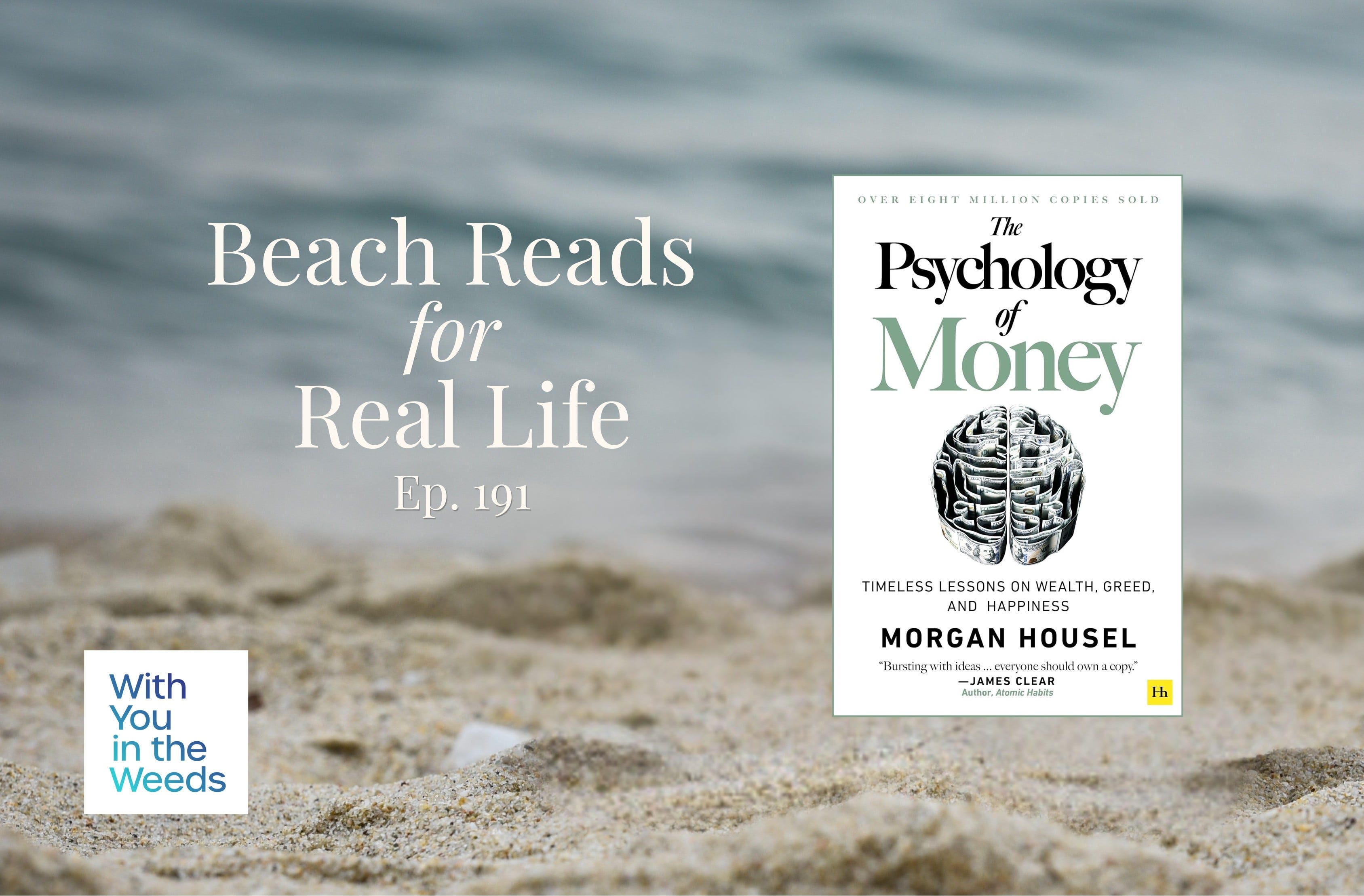
In this stirring conclusion to our Beach Reads for Real Life series, Shay Roush, M.Div., takes a look at The Psychology of Money by Morgan Housel. Despite its title, it’s not really a book about budgeting, investing, or financial formulas. It’s about human behavior.
Housel explores why our emotions, habits, fears, and desires often matter more than financial knowledge itself. His observations are insightful on their own, but they become even more powerful when viewed through the lens of Scripture. Again and again, his money lessons reveal themselves to be discipleship lessons.
As Shay explains three principles from Housel’s book, you’ll discover that your relationship with money is rarely just about dollars and cents. It’s about contentment instead of comparison, freedom instead of appearance, and faithfulness instead of instant results. Ultimately, money is not only a reflection of what you believe about God, but an invitation to trust him to provide.
Highlights from this Episode
As we conclude our Beach Reads summer series, I want to share a book I read on vacation a couple of years ago that’s stayed with me ever since. It still shows up in airport bookstores because it’s been on the bestseller list for years. It’s called The Psychology of Money by Morgan Housel, and I highly recommend it.
Now, money might not be what you expect from WYITW. We usually talk about anxiety, grief, marriage, trauma, and emotions. But here’s the thing: Jesus talked about money constantly; more than heaven, more than hell, more than almost anything else. There are parables about talents, the rich fool and his barns, the widow giving her last two coins. If money mattered enough for Jesus to keep coming back to it, it’s worth spending a few minutes talking about too.
The book isn’t really about finance. There’s almost no math. It’s a book about behavior: why smart people do dumb things with money, why people who never made six figures become wealthy, and why people who make millions sometimes end up broke. Housel’s basic argument is that doing well with money has far less to do with what you know than with how you behave.
As I read it, I kept thinking, These aren’t just finance principles, they’re discipleship principles.
I want to walk you through three of the biggest ideas in the book, hold them up against Scripture, and see what they can teach us about our souls. Because our relationship with money is rarely just about money. It’s about fear, identity, power, control, and whether or not we trust God.
Why Enough Never Feels Like Enough
The first big idea is the principle of having enough.
Housel tells the story of hedge fund manager Rajat Gupta. Here’s a man who had already made millions. Yet because it still wasn’t enough, he illegally traded on insider information trying to make even more, and he went to prison. That’s because the hardest financial skill is to stop moving the goalposts.
Modern capitalism is built to make us feel like we never have enough. Advertising constantly tells us we need the next thing. Once we reach one financial goal, we immediately create another. We compare ourselves to someone with more, take unnecessary risks, and often end up worse off than when we started.
If you’re a Christian, none of this is new. Solomon, one of the wealthiest people who ever lived, wrote in Ecclesiastes, “Whoever loves money never has enough.” The problem isn’t having money; it’s loving money. Three thousand years before a hedge fund manager went to prison, Solomon had already diagnosed the disease.
Where I’d push a little further than Housel is in asking why we never have enough. He’s a finance writer, not a theologian, but Scripture answers that question. We were created for Eden, for a world without scarcity, fear, or comparison. Now we live east of Eden. The ache for ‘enough’ that never gets satisfied by our bank account is ultimately an ache for God. Augustine said, “Our hearts are restless until they find rest in him.” I think our wallets are restless for the same reason.
Paul gives us the antidote in 1 Timothy: “Godliness with contentment is great gain.” You brought nothing into the world, and you can take nothing out of it. True contentment isn’t a financial number; it’s a posture of the heart. It’s something you can learn whether you have much or little.
So here’s the question: What’s your number? What amount do you think would finally make you feel secure? And if you reached that number tomorrow, would you actually stop moving the goalposts? Or have you asked your bank account to make you feel safe and secure? Can you get to the place where you say, “I don’t have to keep running on the treadmill of comparison because my life is built on Christ”?
The Freedom Money Can’t Buy
The second big idea is the difference between being rich and being wealthy.
Being rich, Housel says, is visible. It’s income, spending, the nice car, the big house, the vacations you post online. Wealth is invisible. It’s the money you didn’t spend. It’s the gap between what you earn and what you spend. That gap gives you options, freedom, and margin.
Many people who look rich are simply good at spending. The people who are actually financially free often look completely ordinary. Housel tells the story of Ronald Read, a janitor who quietly accumulated about $8 million by living simply and investing patiently. Nobody knew until he died. Housel contrasts that with people making seven figures who still file for bankruptcy because their spending always rises to match their income.
I think this is one of the most spiritually insightful ideas in the book: There’s a difference between looking blessed and actually being free. You can have the house, the car, and the lifestyle and still be financially enslaved and terrified that one bad month will bring everything crashing down. Or you can live an ordinary-looking life with tremendous freedom because you’ve built margin instead of image.
It reminds me of Jesus’ parable of the rich fool in Luke 12. His crops produced so much that he built bigger barns to store everything. Then he said, “Soul, take your ease; eat, drink, and be merry.” And God said, “You fool. This very night your soul is required of you.” The fool was visibly rich, but he wasn’t wealthy in any way that mattered. Everything he valued was stored in barns that couldn’t follow him into eternity.
I think many of us are still building bigger barns. But the size of the barn was never the point. The question is who you’re becoming while you build it. Are you creating margin? Freedom? Generosity? Or are you simply building a bigger container for your fear because you’ve placed your hope in money instead of Christ?
How Lasting Change Really Happens
The third principle is compounding.
Housel spends a lot of time explaining that small, consistent actions repeated over a long period produce extraordinary results. Warren Buffett accumulated most of his wealth after age 65, not because he suddenly became smarter, but because he’d been compounding faithfully for decades.
I think this may be the most spiritually useful idea in the entire book. We all want breakthroughs. We want a miracle. We want instant transformation. But God usually works through compounding. Small, faithful, ordinary obedience repeated over years doesn’t look impressive in the moment. Then one day you look back and barely recognize the person you used to be.
Paul writes in Galatians, “Let us not grow weary in doing good, for at the proper time we will reap a harvest if we do not give up.” That’s compounding. The maturity you’re praying for, the marriage you’re hoping for, the freedom from old patterns you keep confessing. It usually isn’t one lightning bolt. It’s a thousand faithful Tuesdays that don’t seem to be accomplishing much until suddenly they have.
The Heart Behind Your Money
So let me leave you with three simple takeaways.
Name your enough. Decide what ‘enough’ actually looks like so you recognize when the goalposts start moving again.
Ask whether you’re building wealth or just looking rich. Pay attention to the gap between what comes in and what goes out. That’s where freedom lives.
Trust the compounding. Whatever small, faithful thing you’re doing right now, don’t quit because it doesn’t look impressive yet. It’s doing more than you can see.
Underneath all three of these principles is the most important point: Your money is one of the most honest mirrors of what you actually believe about God. Not what you say you believe, but whether you really believe he’s trustworthy. Whether ‘enough’ is possible this side of heaven.
God often uses money to reveal where we still don’t trust him and to invite us into the contentment Paul describes. Not because we’ve finally reached our ‘number’, but because we’ve finally learned to rest in Jesus.
Recommended Resource
The Psychology of Money by Morgan Housel