

Have you ever prayed desperately for something, only to be met with silence from heaven?

In this powerful conversation, Shay sits down with his father-in-law, Pastor Erwin Lutzer, about the discouragement of unanswered prayer. When your earnest prayers seem to go unanswered, it’s difficult to comprehend how God’s “no” might serve a greater unseen purpose. It turns out that God may accomplish more through unanswered prayer than through the answers you long for.
You’ll walk away from this second episode in our How to Handle Life series with practical help, including how to pray with right motives, a simple framework for meaningful prayer, and encouragement to be honest with God about your disappointment while still choosing worship.
If you’ve ever felt let down by God or wondered whether prayer really matters in light of his sovereignty, this episode offers hope, clarity, and a deeper invitation to trust him—even when heaven is quiet.
Highlights of Shay’s Conversation with Pastor Lutzer
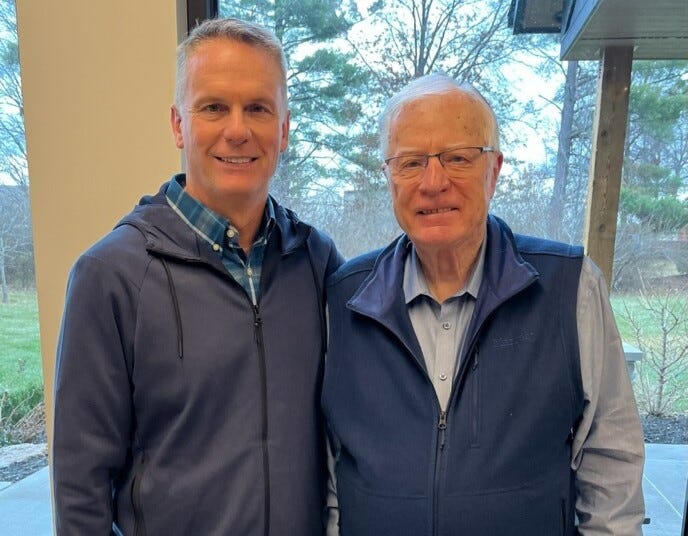
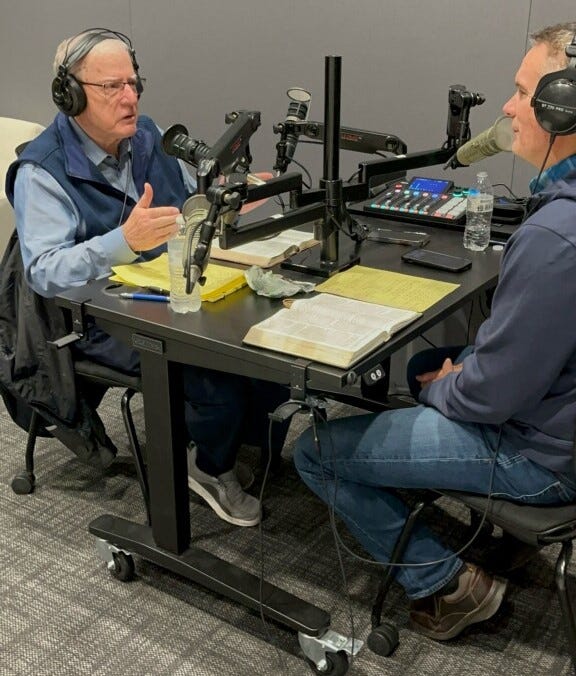
Shay: Today we’re looking at a very practical question: Why doesn’t God answer my prayers? It’s something all of us have wondered at some point. To talk about this, I’m joined by my father-in-law, Pastor Erwin Lutzer. Welcome!
Pastor Lutzer: So glad to be with you today, Shay. We’re discussing this because so many people are discouraged with God. They cry out to him, believing their request is right, believing that if God loved them he would answer—and when he doesn’t, they’re left discouraged.
Shay: In one sense, prayer is simple; it’s just talking with God. But it can also be far more complex than we realize. Having known you for many years, I know that you are a man of prayer; you regularly pray for your children and grandchildren. So that’s one reason that I wanted to have you speak on this topic today.
You have a new book coming out called Why Doesn’t God Answer My Prayers? I’d like to start by asking, why did you feel compelled to write it?
Pastor Lutzer: So many people today are deconstructing—they’re leaving the faith. One major reason is unanswered prayer. I think of a woman who came to me in tears and said, “God has abandoned me.” Her husband had been sick, and she was convinced he would be healed. When he wasn’t, she concluded God was no longer interested in her.
She had been listening to teaching that said healing is in the atonement, and if you have enough faith, you can insist God heal you. But it didn’t happen. I’ve seen this before. My parents knew a couple who believed they would never die because they could claim healing every day until Christ returned. Of course, they died many years ago.
Yes, healing is in the atonement. Jesus died for us—body, soul, and spirit. But there are blessings we don’t fully receive in this life. We will receive those blessings eventually. We’ll have resurrected bodies. But until then, even faith healers die. Poor theology about prayer can leave people deeply disillusioned with God.
Shay: There are times Scripture tells us to call the elders together and pray for healing. How do we think about that rightly?
Pastor Lutzer: At Moody Church we did that regularly. But when people asked for prayer, I always talked with them first. Often there were sin issues that needed to be addressed. James says the prayer of faith can bring healing, but he also talks about forgiveness, repentance, and right motives.
I’ve seen people healed. I’ve also seen many who were not. That creates tension. James later says, “You ask and do not receive, because you ask wrongly, to spend it on your passions.” He’s warning us not to treat God like a slot machine.
Then James tells us the posture we must have: submit to God, resist the devil, purify your hearts. Prayer must come with humility. Even when we ask for good things, we must end where Jesus did: “Not my will, but yours be done.”
There are promises we can always count on: salvation, forgiveness, God’s presence. But God has never promised to give us everything we ask for simply because we ask.
Shay: The Bible itself gives us many examples of unanswered prayer.
Pastor Lutzer: Absolutely. Think of the Apostle Paul. He prayed three times for the thorn in his flesh to be removed. God said no, but added, “My grace is sufficient for you.” God wasn’t abandoning Paul. It’s probably a good thing that Scripture doesn’t tell us what Paul’s thorn was, so that we can relate to his struggle.
I knew a woman whose husband died young. She was furious with God. She would drive to church crying, shouting, “Your grace is not sufficient!” One day she poured out her anger before God and confessed what she called “cartloads of self-pity.” From that day on, she could finally say, “Your grace is sufficient.”
Paul eventually said, “Most gladly therefore will I glory in my infirmities, that the power of Christ may rest upon me.” When I am weak, then I am strong. God often brings you to weakness so you’ll depend on him.
Shay: We also see this many times in the Old Testament.
Pastor Lutzer: Yes! Habakkuk is a fascinating example. He begins by crying out, “God, where are you? Look at the violence!” God answers, “I am working behind the scenes by raising up the Babylonians against you.” Habakkuk basically responds, “That’s not the answer I was looking for.”
But by the end of the book, Habakkuk trusts God’s sovereignty. Even though everything will be destroyed, he says he will still rejoice in the Lord. You don’t have to understand God’s ways in order to trust that he knows what he’s doing.
Shay: In your book, you say the ultimate example of unanswered prayer is Jesus himself.
Pastor Lutzer: When I wrote that section, I literally got off my chair and fell on my face before God. In Gethsemane, Jesus prayed three times, “Father, all things are possible for you. Take this cup from me.”
What if God had answered that prayer? You and I would not be redeemed. Our salvation was purchased through an unanswered prayer.
God may be doing more through unanswered prayer than he ever does through answered prayer. We have no idea what he is protecting us from.
God may be doing more through unanswered prayer than he ever does through answered prayer. We have no idea what he is protecting us from.
Shay: Even knowing all this, unanswered prayer can still leave us disappointed.
Pastor Lutzer: Hebrews talks about believers who joyfully accepted the loss of their possessions because they were looking to a greater reward. And of course Jesus endured the cross because of the joy set before him.
If you are angry with God, tell him. Do it reverently, but tell him. David did. Psalm 77 asks, “Has God forgotten to be gracious?” God can handle your honesty. But don’t stop there. Meditate on God’s faithfulness. Every lament in Scripture eventually turns into worship. When you don’t know what to do with God, worship him.
Shay: So let me ask you this: If God is sovereign, does prayer really change anything?
Pastor Lutzer: I once preached at Brooklyn Tabernacle, where 1,500 people gather for prayer. I told the pastor, Jim Cymbala, that I think it’s great when we have 100 people gathered for prayer. I asked him how they get so many people to come to prayer meeting and he told me, “Your church would be full too if your people believed God answers prayer.”
Jesus said the Father knows what we need before we ask—and then he told us to pray. God invites us into his work. Often he gives us burdens because he wants us to be part of the solution. The prodigal son came home because he was hungry, but he needed his father more than supper.
You and I can take prayer, whether it is answered our way or not, and go beyond prayer to fellowship, worship, and connection to God. Why do you think God gives us so many trials? It’s so that we might always depend on him.
I wake up every morning and say, “I will bless the Lord at all times.” I never let a morning go by without reminding myself that today there’s going to be a lot of mystery. But at the end of the mystery, it’s all about worshiping God.
If you need help praying, use the ACTS model (use the book of Acts to remember):
Adoration: This step is critical. Spend time adoring and worshipping God.
Confession: Let God search your heart. Get to the bottom of the guilt that you are carrying because of unconfessed sin.
Thanksgiving: You can’t give thanks for everything, but in everything. When you give thanks, you begin to see things from God’s perspective.
Supplication: Share with God the desires of your heart and transfer the weight of the burden from your heart to his very steady shoulders.
The greatest faith is not to see miracles. The greatest faith is to accept whatever God gives you. The last part of Hebrews 11, the great statement of faith, is all those who saw no miracles. They were persecuted. They lived humble lives and then died, but they were also heroes of faith.
Shay: That’s such a fitting place to end. Pastor Lutzer’s book Why Doesn’t God Answer My Prayers? is available for preorder. He also has a daily devotional called Running to Win that is a combination of the writings of D.L. Moody with his own thoughts. I’ve been reading it every day and finding it very helpful. Thank you for your ministry, Erwin, and for being my father-in-law.
Pastor Lutzer: Thank you, Shay. I’m grateful to be with you. We’re so glad you married our lovely middle daughter.
Recommended Resources:
Why Doesn’t God Answer My Prayers? A Biblical Guide to
God’s Hidden Purpose by Erwin W. Lutzer
Running to Win Daily Devotional by Erwin W. Lutzer (365 days inspired by D.L. Moody)