

What keeps someone steady when every decision could mean the difference between life and death?
Most of us will never command soldiers through a war zone or spend our days searching for hidden roadside bombs. But we all know what it feels like to carry responsibilities that seem heavier than we can bear. Whether you’re leading a family through a crisis, making difficult decisions at work, or simply trying to stay faithful in a stressful season, pressure has a way of revealing where you place your trust.
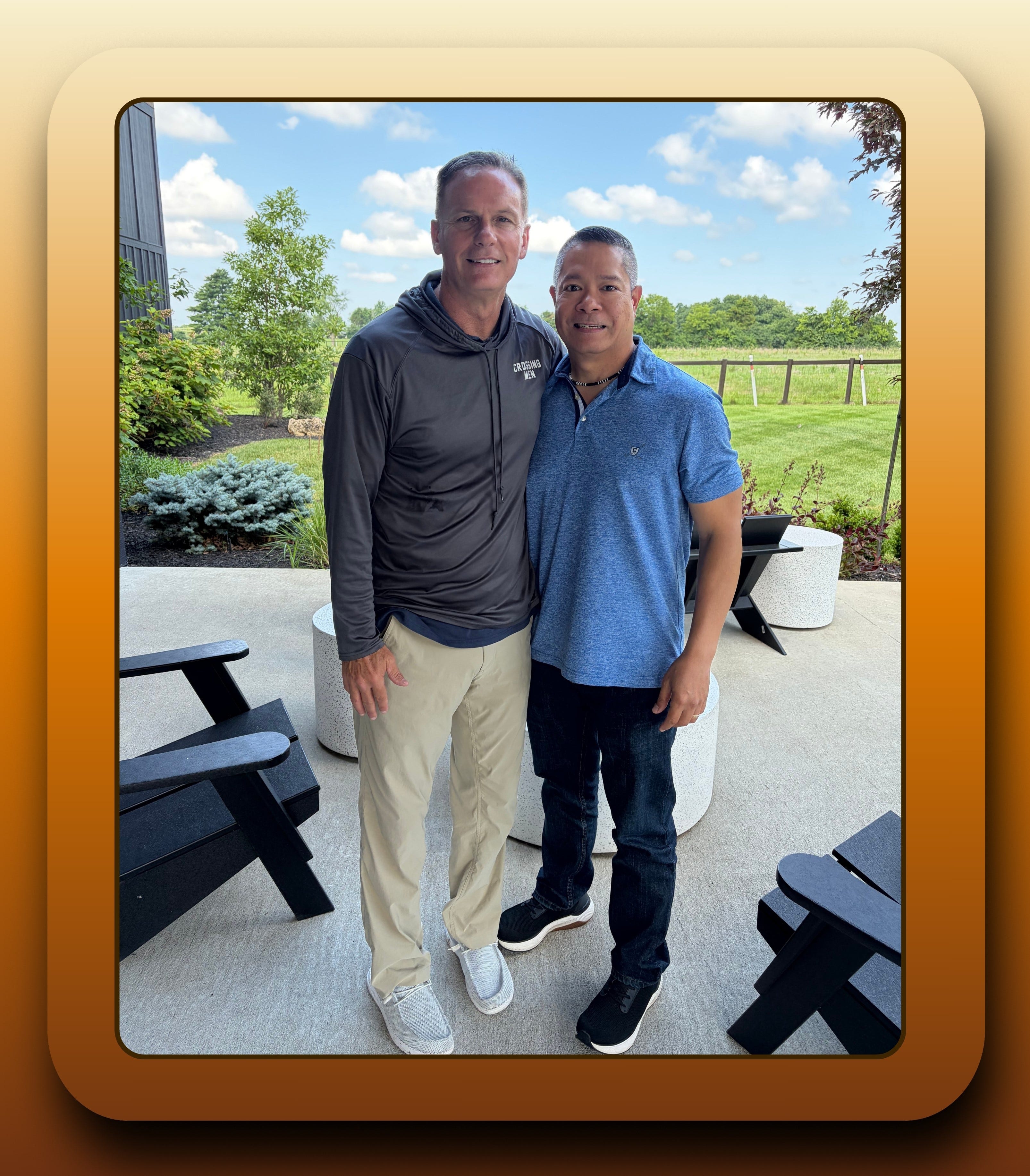
In this gripping episode of our new series, Performing Under Pressure, Shay Roush, M.Div., sits down with Vince Bentinganan, a retired Army lieutenant colonel and former Commander of Bravo Company, 110th Engineer Battalion, to hear about the realities of searching for improvised explosive devices (IEDs) during Operation Iraqi Freedom, in a hostile environment with brutal physical, mental, and spiritual conditions.
As they reflect on their 20-year friendship, Vince shares openly about the stress of combat, the weight of leadership, and the spiritual disciplines that kept him grounded during deployment. It turns out that things like prayer, godly friendships, connection, and encouragement are helpful even in one of the most dangerous environments imaginable.
Whether you’re navigating a season of overwhelming responsibility or simply wondering how to remain steady when life feels scary or uncertain, Vince’s story of faith under fire offers timeless wisdom and abundant hope.
Highlights from this Interview
Shay: We’re interviewing people in high-stress professions to learn how they manage stress and what they discover about themselves in the process. Today I have the opportunity to interview a good friend of mine, Vince Bentinganan.
Vince: Thank you for having me. It’s an honor to be here. When you asked me six weeks ago while we were in Greece, I was both nervous and excited, and I still am! We’re recording this on the heels of celebrating America’s 250th birthday, and at the same time, I’m now 20 years removed from my deployment to Iraq in support of Operation Iraqi Freedom.
Shay: We’re so glad to have you. Today you work for the American Red Cross and travel around the country when disasters strike. But we first met in 2002, when The Crossing was still a church plant meeting at a local high school.
You introduced yourself and told me you were heading to Iraq. You asked if we could email each other while you were deployed. I wasn’t sure what I was getting myself into, but I wanted to support someone going off to war. That’s how our friendship began. Tell us what led you to join the National Guard and eventually serve in Iraq.
Vince: After my freshman year at the University of Missouri, I wasn’t doing well. I was hanging out with my buddies and making poor decisions. My best friend, John—who later retired as an Army helicopter pilot and lieutenant colonel—pulled me aside and said, “You need to get back on track. Join the Army National Guard and go to basic training.” I enlisted that same day, went to basic training that summer, and served for 29 years.
Shay: I’m thankful your friend stepped in and gave you that direction. How long had you been in the National Guard before deploying?
Vince: I enlisted in 1990 and deployed in 2005, so I’d already served 15 years. The first ten years were as an enlisted soldier, and the next nineteen were as an officer. I eventually retired as a lieutenant colonel, but during my deployment I was an Army captain.
When I asked you to pray for me, I was leaving my wife, Amy, and our two young boys back at home. Grant was almost five, and Evan was three and a half. We wanted Amy and the boys to find a church home and have a strong community around them while I was gone.
Shay: So Iraq was your first experience in a war zone. What was your role there?
Vince: I was an Army captain and combat engineer officer, commanding Bravo Company, 110th Engineer Battalion. I had 127 soldiers under my command, and they were the best group of soldiers I’ve ever served with. It was the pinnacle of my military career.
Our primary mission was route clearance—finding IEDs before U.S. and coalition forces or Iraqi civilians encountered them. We also provided convoy security across Iraq, from the south all the way north to Mosul, helping protect military supply runs and supporting Iraqi law enforcement. The conditions were brutal. Temperatures reached 110 to 120 degrees. We carried about 35 pounds of gear, ammunition, body armor, and water, riding in vehicles with no air conditioning.
Our route clearance missions were slow and deliberate. We’d move about five miles an hour, scanning for anything that looked out of place, like a patch of dirt that hadn’t been there before, or trash covering part of the road. If we found a suspected IED, we’d establish security and call in the Explosive Ordnance Disposal team to safely destroy it.
Shay: I remember reading your emails while sitting in my comfortable office in Columbia, Missouri, and thinking, Vince, we are living in two completely different worlds. You were leading the soldiers finding these roadside bombs. What did that responsibility look like?
Vince: I commanded four platoons, each led by a lieutenant and platoon sergeant. I truly believe I had the best group of leaders in Iraq. They led from the front, they were courageous, and they made my job much easier. Our missions ran around the clock. Whether it was two in the afternoon or two in the morning, we had three or four route clearance missions happening every day.
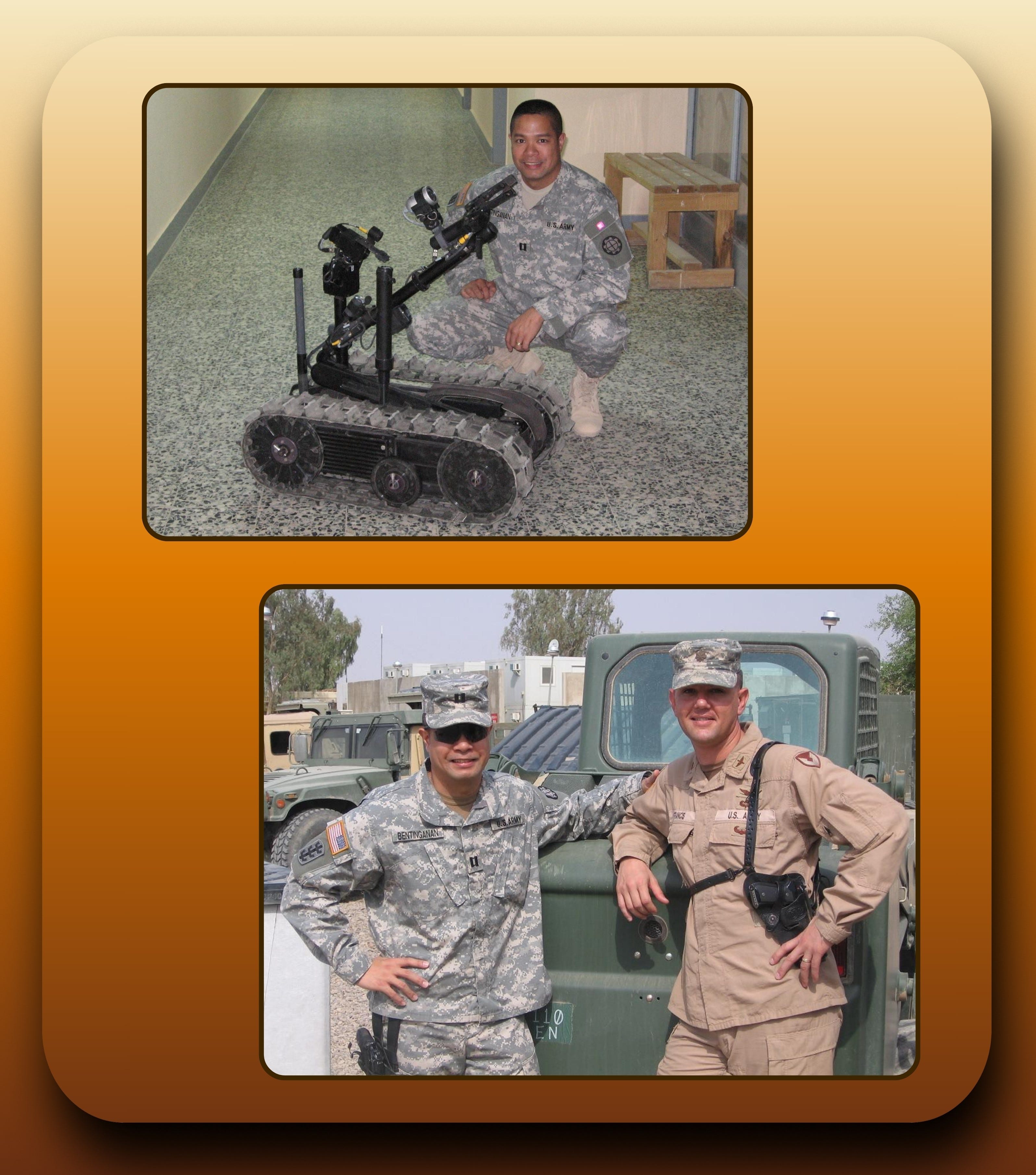
In addition, we had another mission called route sanitation. Iraq’s main supply routes were covered with trash and debris, creating places where roadside bombs could be hidden. One of my platoons operated up-armored bulldozers, graders, and scrapers to clear the shoulders and medians while the rest of us provided security. Those two missions worked hand in hand, and at the time we were one of the few companies in Iraq doing that type of work.
Shay: How often would you actually find IEDs? And were there times when your company came under direct fire?
Vince: During our 360 days on the ground, the three route clearance companies in our battalion cleared more than 950 roadside bombs. At the time, that was remarkable. Other battalions, brigades, and divisions relied heavily on the 110th Engineer Battalion because we provided safe passage for infantry units, logistics convoys, and so many other critical missions throughout Iraq.
Shay: Were there times when tragedy struck?
Vince: Several soldiers in my company suffered minor injuries, but God kept his hand on us. I can’t explain why other companies lost soldiers while Bravo Company did not.
Shay: That’s incredible. As we’ve been interviewing people for this series, everyone experiences stress in their profession. But I’m not sure I could interview someone who carried more pressure than you did. And as I look at you, I can see this still isn’t easy to talk about. Thank you for being willing to share. So let me ask you, how did you get through the stress?
Vince: There was a level of stress that I simply don’t experience today, even working for the American Red Cross. Over the course of that year, we experienced close to four dozen IED strikes on vehicles. I witnessed several of them firsthand. Sometimes my soldiers were in those vehicles. One time my own vehicle was hit.
The radio traffic would erupt into chaos. Insurgents often followed the explosion with small-arms fire, and our gunners would return fire from the turrets. It was incredibly chaotic. I think it all comes back to our training. We learned to remain calm, trust our training, and follow protocol.
Shay: How did you process all of this? Were there chaplains there with you? Were there people you could talk to when you came back to camp to help deal with the stress?
Vince: It’s incredibly important for men to have other men of faith to talk to. I had two men at the time. One was my boss, Colonel Mitch Passini. He was a man of faith, and we’d have daily conversations about our mission, how things were going, and the welfare of our soldiers. He loved and cared for soldiers, and he was a great example for the four company commanders he led, including me.
Then there was Chaplain Philip Pringle. I was 35 at the time, and he was in his mid-50s, so about my age now. He was like a father figure to me during my time in Iraq. He and I spent a lot of time talking through what was going on in my soldiers’ lives back home, because that affected their mental state. We wanted soldiers going on missions with clear minds.
Once we left the safety of the base, the younger soldiers were rocking out to AC/DC and Metallica, getting psyched up for the mission. But once we got onto the main supply route looking for IEDs, the music went off. In my mind, I prayed a lot during those missions, and that was one of the biggest things that relieved my stress. When we got back to base, it was about taking care of yourself. I was reading, praying, working out when I could, and trying to eat as healthy as I could.
And honestly, Shay, communicating with you was extremely helpful. Knowing that Amy and the boys were plugged into The Crossing brought comfort. You emailed me, sent care packages, and encouraged me. I still remember the email where you said, “We live in two different worlds.” I remember thinking, That’s exactly right. I saved all those emails. I haven’t looked at them in years, but they meant a great deal to me. They were really the beginning of the friendship we’ve had now for over 20 years.
Shay: It’s been a gift to watch our friendship grow. You’ve led a small group at our church, you’ve been in my men’s group for years, and you and Amy have been an encouragement to Lynn and me.
As I listen to you, I’m realizing there was another level of leadership you were carrying. Families were grieving, parents were dying, children were sick. You were helping your men navigate all of that while leading them through combat.
Vince: Looking back, I tried to stay within my role as the company commander. Spiritually, I wanted to encourage my soldiers, but I also wanted to let the chaplain fulfill his role. Late in the deployment, after I’d helped many soldiers through Red Cross notifications, I received one of my own. My father was dying. My commander, Colonel Passini, gave me ten days of leave so I could come home for my dad’s funeral. I was grateful I could be there with my family before returning to Iraq.
Shay: Just to summarize what got you through the stress. You mentioned prayer, talking to godly men, relationships in general, exercise, eating well, and your faith. My guess is, your view of God became incredibly important during that time.
Vince: It absolutely did. When you and I first met, Shay, and you prayed for me before I deployed, that’s exactly what you told me—that God was sovereign over my life. It was really the first time I’d heard that phrase. That truth has stayed with me. It’s shaped how I handle stress today. I’m certainly not perfect at it, but those lessons have carried into every season of life.
Shay: They really have. After you retired from the National Guard, you worked as a loan officer in a very demanding role. Today you’re with the American Red Cross, responding to disasters around the country. It seems like you’re still relying on many of those same lessons you learned in Iraq.
Let me ask you one final question. Someday, when you’re old and gray and you look back on your life, what do you hope your legacy will be?
Vince: That’s a great, thought-provoking question. I’m glad you sent it to me ahead of time because it gave me time to pray and reflect. The verse that comes to mind is 2 Timothy 4:7: “I have fought the good fight. I have finished the race. I have kept the faith.” That sums up the legacy I’d like to leave: having God-centered relationships, believing the truth of Christ, and helping others do the same.
Shay: Vince, thank you for your service to our country, but even more, thank you for your friendship over the last 20 years. And thank you for sharing your story with us.
Vince: Thank you, Shay, for giving me this opportunity. What means the most to me is that this isn’t just my story, it gives me the opportunity to tell the story of my soldiers. That’s really how I viewed this interview from the moment you asked me to do it. I appreciate your friendship. I love you, man.
Shay: I love you too. Guys don’t say that enough to each other!