

What does it take to stay calm when someone else’s life is in on the line?
Some job stress is obvious: a trauma surgeon racing against the clock; a firefighter responding to an emergency; a CEO making decisions that affect hundreds of employees. Other job stress is harder to see but just as real: a teacher trying to reach a struggling student; a parent caring for young children; an employee trying to do good work while navigating high expectations. That’s why we’re launching our brand-new series, Performing Under Pressure.

Over the next few weeks, we’ll sit down with people from a variety of professions to discuss the unique pressures they face, how they manage stress, and the ways their faith in Jesus shapes their work. If it’s a career that’s similar to yours, you’ll feel encouraged to keep going. If not, you’ll gain understanding and insight into the different pressures people face. As it says in Galatians 6:2, “Bear one another’s burdens and so fulfill the law of Christ.”
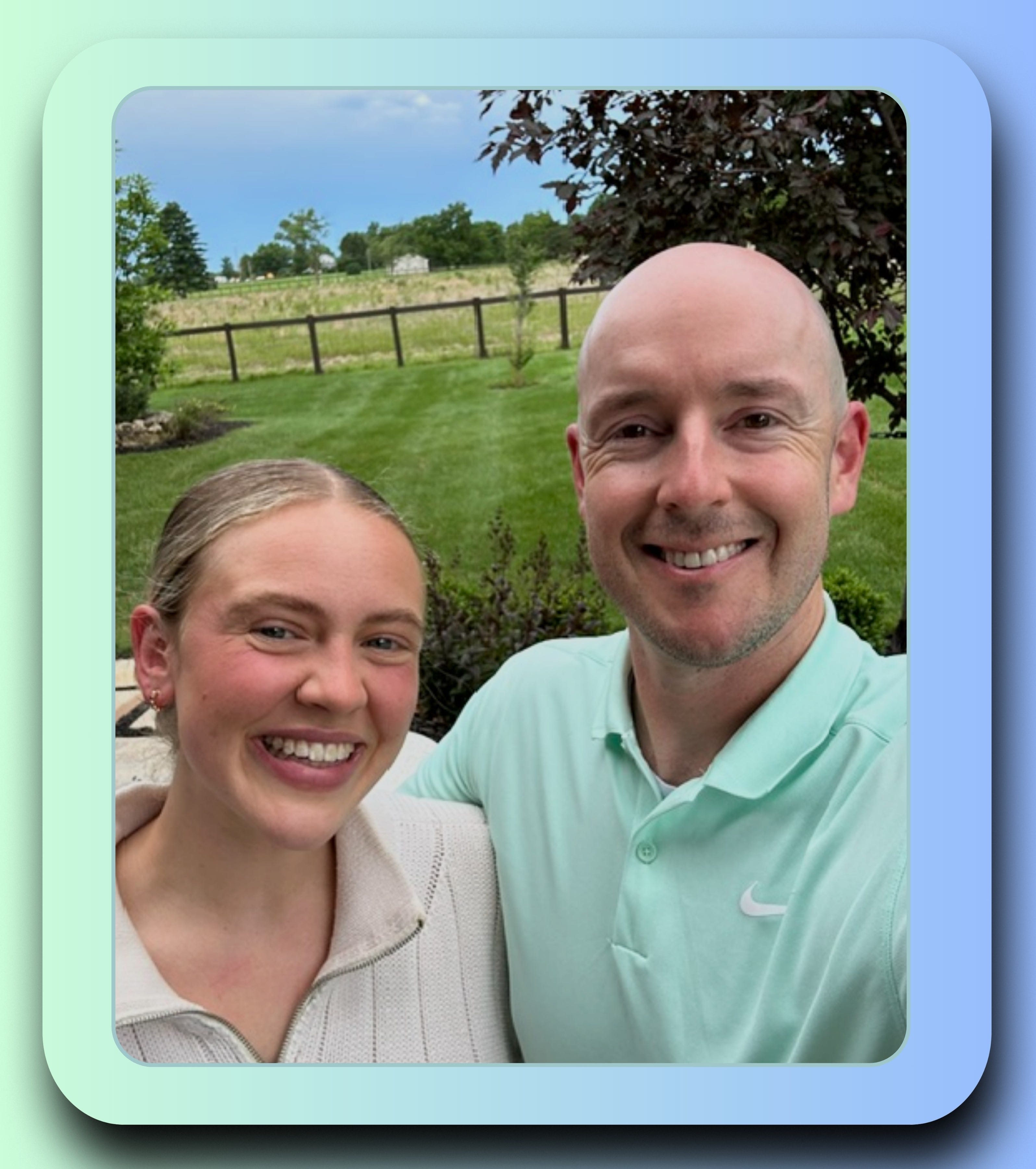
Our first guest is Caroline Vandervoort, an emergency room nurse at University Hospital in Columbia, Missouri. In this enlightening conversation with Austin Conner, PLPC, Caroline shares what it’s like to work in the trauma bay, care for patients on the hardest day of their lives, receive criticism without becoming cynical, and battle compassion fatigue by relying on God’s strength.
Whether you work in healthcare or not, we think you’ll see yourself in Caroline’s story. Because ultimately, this episode isn’t just about emergency medicine. It’s about remaining compassionate under pressure, pursuing excellence without losing your soul, and discovering that Jesus is present even in trauma and chaos.
Highlights from this Interview
Austin: Today I have the privilege of interviewing Caroline Vandervoort. Caroline is an ER nurse at University Hospital in Columbia, MO.
I first met Caroline in my final year of directing The Crossing’s college ministry. She was a freshman who agreed to join a book study through an insanely long New Testament Commentary, and she held her own! I was immediately impressed by her desire to learn and grow. I moved on to grad school and began counseling, but I always saw her around—most recently at the DMV of all places!
When we met up to plan this episode, I was stunned speechless, not only at hearing about what she goes through in her job on a week-to-week basis, but how she handles it and the mature perspective she brings to her job.
Caroline, say hello to our audience and tell them a little bit about yourself. What is your current role and how did you end up there?
Caroline: I’m excited to be here. Thank you for inviting me! I am from St. Louis originally and attended Brentwood High School. It’s a small high school; there were only about 55 kids in my grade. After I graduated high school, I came to Mizzou and graduated December of 2021. I started my career as a nurse straight off in the ER, which I didn’t think I was going to do.
But the Lord directed me to that path. I thought I was going to do labor and delivery or pediatrics. That was kind of more my speed. It turns out that I have a heart for the variety and the chaos and the level of critical care you get with the ER.
Austin: Tell us more about how you ended up there.
Caroline: When I was in college, I was working as a tech on the family medicine floor, and then I went to the float pool for a few years after that. And then my last semester, we did a practicum where we spend 180 hours in one unit. I had put my preference for the ICU and then put ER second, but I was just praying through wherever the Lord had me. I ended up in the ER for that whole semester, and I loved it so much.
There are many challenges: starting IVs, intubating people, seeing seizure activity even if that’s not what the patient came in for—they suddenly start seizing and you’re thrust right into it and have to run and get the Ativan and all the things.
There are times when you have to wrangle really combative, violent patients that are brought in by law enforcement. You’re putting restraints on people and just trying to survive as a young nurse. It feels like major imposter syndrome, like all this weight and burden on me right away to be able to have all these skills and take care of these patients that I don’t really know how to.
Austin: What have been some of the upsides of being an ER nurse?
Caroline: One of the upsides has been all the interpersonal skills that I’ve learned in terms of interacting and meeting people where they are and with what they need. Being everything to all people. It can be hard, but I think that has blessed me in all areas of my life.
It’s amazing the diversity and different socioeconomic statuses and the kinds of people that you see. I felt like I lived in a bubble for so long with people my age and my socioeconomic status. In the ER, my eyes were opened to the wide array of people that live here and the various struggles they have. You’re meeting them at the most vulnerable place and one of the hardest days of their life sometimes.
Austin: Can you share some of the specific pressures of being an ER nurse?
Caroline: I think a lot of people probably don’t realize how many things can be on a nurse’s to-do list at any given moment. Especially when you’re caring for four or five patients at a time, people are constantly moving in and out. You’re discharging patients, getting new ones, sending off labs, starting IVs, giving medications, charting assessments, and handling all these other tasks.
And then you’re also the person everyone comes to. You’re the middleman for everything. The doctors are talking to you, the radiologists are talking to you, the charge nurse is asking questions, and family members need updates. You have to know the big picture of what’s going on with each patient, but also all the details. If someone needs a blood transfusion or another treatment, you need to know exactly how much, where it’s going, and why.
You might have three different doctors asking you questions, and then after all that, you have to make sure everything gets done correctly. And that’s just one patient. Then you have three or four more patients you’re responsible for...and suddenly five more come through the door.
Austin: What part of your job has the most pressure?
Caroline: The trauma bay, where there is the most stress and the details really matter. Trauma surgeons will yell at you if you do something one second too late. There’s a strict protocol: the head nurse delegates the care; the float nurse takes blood pressure and establishes IV access…there are so many bodies, so much happening at once.
Austin: That’s a lot! How have you learned to manage or handle that pressure?
Caroline: The more you do it, the easier it gets. You have to go through discomfort to gain your confidence. In the beginning I would be able to rally—I would meet a friend for drinks and spend time with the church community. But the chronic stress of work made me feel like I needed to collapse and not talk to anyone. Now, on my days off, I recharge with exercise, clean eating, good sleep, and spending time in the Word.
Austin: How do you handle all the hardships and trauma that you encounter?
Caroline: I don’t want to be flippant and hardened and cold to peoples’ pain and situations. Some patients belittle me and that hits me to the core. If they said I was incompetent, this would stay with me and affect the rest of my day. Instead, I remind myself: “I am secure in who I am. I know I’m a great nurse. I know that I do a great job.” I pray for people when I’m tempted to lash back out at them.
I was having such a bad morning, and when I went to a patient’s room, she belittled my ability and character. I left the room crying. But then went back in there and killed her with kindness. I stood up for myself but did it with a tone of kindness and it diffused the situation. She apologized and was repentant.
I had a patient a few months ago who left against medical advice. He had a look of disdain and disgust and spoke horribly to me. Then I had another patient who was difficult. I was pulled in many directions and started to have compassion fatigue. I went to a supply closet and started crying to God. “Why would you give me this today? I can’t deal with this.” I wasn’t feeling the presence of the Lord.
All of these feelings won’t kill me. But I had to process them. I reached out to small group leader. She reminded me it’s ok to sit with all of these feelings. That gave me a lot of hope and shifted my perspective. I shared this experience with my community group as well. Now when I’m in that closet crying, I picture Jesus saying, “That is my daughter fighting for me in the kingdom.” Anything that causes me to look more like Jesus I will gladly bear.
Now when I’m in that closet crying, I picture Jesus saying, “That is my daughter fighting for me in the kingdom.” Anything that causes me to look more like Jesus I will gladly bear.
Austin: Where and how has your faith informed your role as a nurse?
Caroline: Sometimes it seems like the work we’re doing is pointless; it feels like a band-aid on a bullet wound; the problems are so complex and I’m working in a system where we slap on quick fixes on things sometimes.
I tell myself I’ll do my job with excellence and integrity even when it’s easy to cut corners. If no one else sees me cut corners, Jesus would. I’m working for the Lord, and that informs the integrity of my actions. I try to do things with excellence, but that’s easily overlooked. It would be nice to be recognized more, but mostly I want my patients to feel blessed that I’m their nurse. Even if my boss doesn’t get it, Jesus is pleased.
Austin: What have you learned about Jesus in your role? Where and how have you seen him ministering to you?
Caroline: If you have eyes to see and are aware of his presence, he’ll give you opportunities to be his hands and feet. Who he places before you is so intentional. There are no accidents. There is something to be learned from every situation and you can always bring glory to God. I frequently ask God, “What do you have for me today? Help me to see opportunities and open doors.”
Austin: That’s amazing. Caroline, thank you so much for being on today!