

What if winning has less to do with what you accomplish and more to do with who you become?

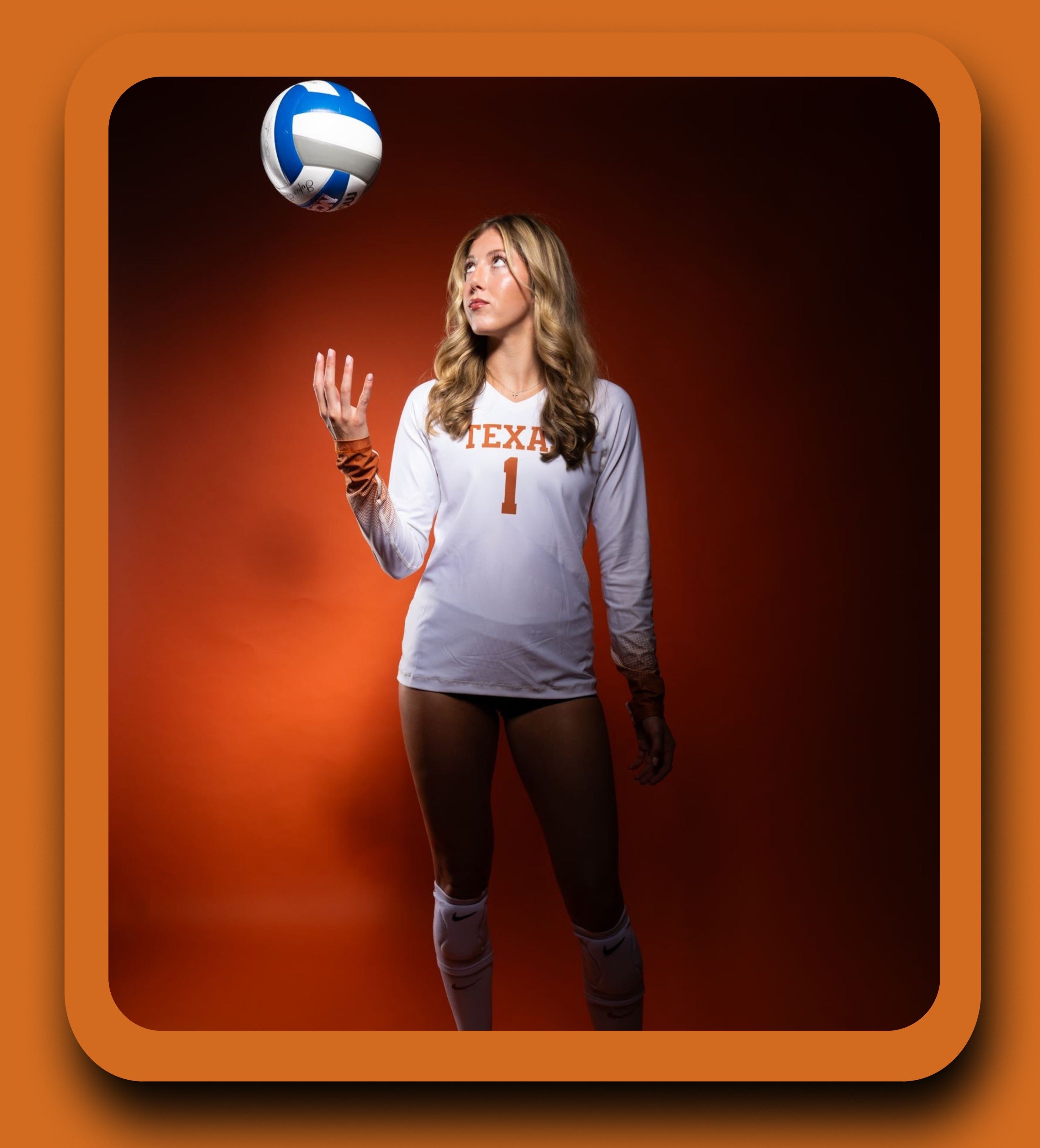
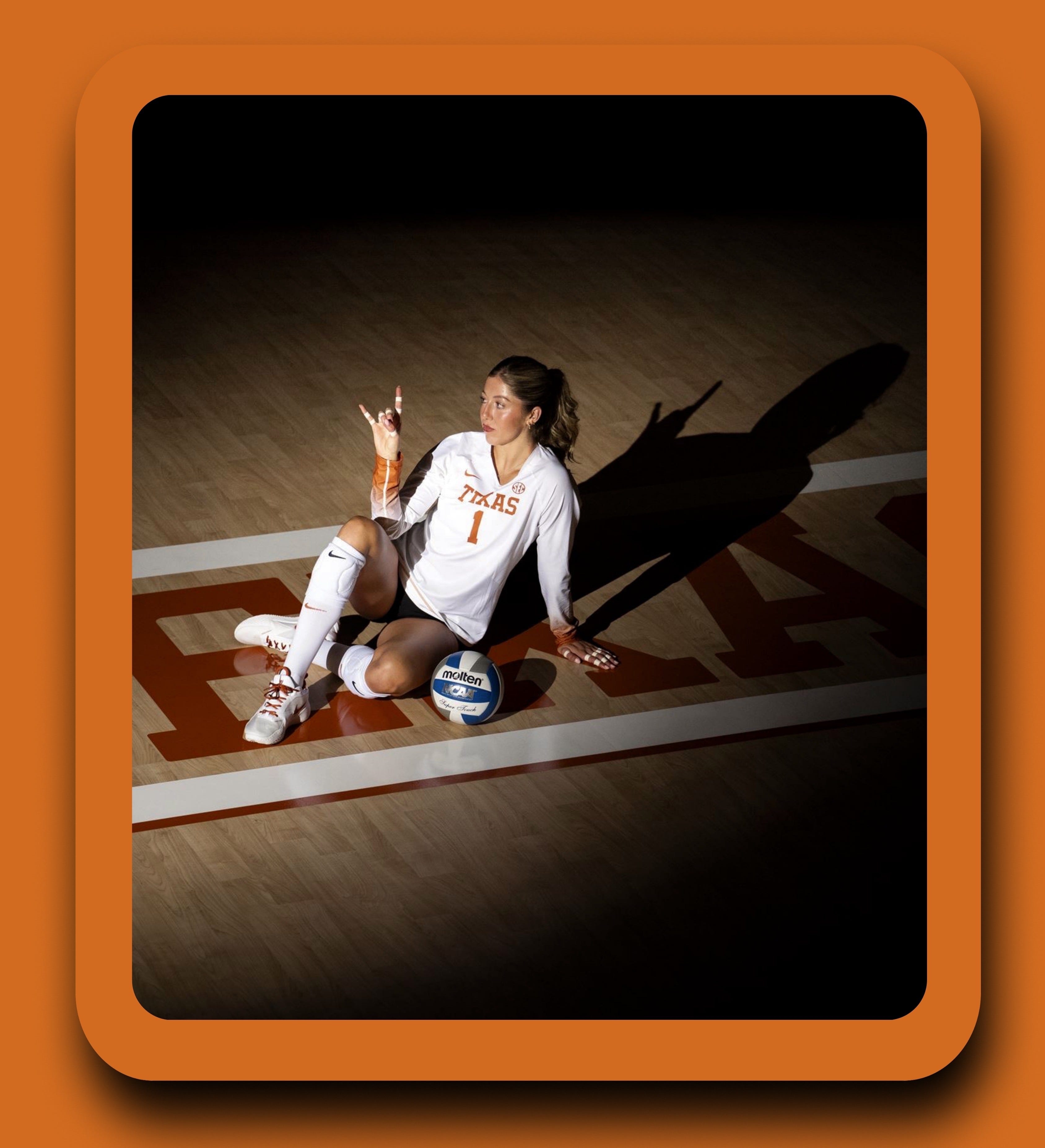
In this spirited episode of Performing Under Pressure, Lynn Roush, LPC, sits down with Ella Swindle, a senior setter for the University of Texas Longhorns volleyball team who helped lead her team to an NCAA National Championship as a freshman. As a setter, Ella occupies one of the most demanding positions on the court: she calls the plays, directs the offense, and has to reset quickly after every point. But some of the most significant pressure she’s faced hasn’t come from the volleyball court at all.
For Ella, college athletics has become a place where questions of performance, identity, expectations, and faith collide. She opens up about the internal voices that tell her she’s not enough, and the hard work of learning to distinguish truth from lies. Along the way, she has discovered the importance of finding solitude, stepping away from social media, and becoming her own biggest cheerleader.
At the heart of Ella’s story is a growing confidence that her identity isn’t ultimately determined by a scoreboard, a coach, a career, or other people’s expectations. As she looks beyond volleyball towards her future, she’s beginning to define success not simply by what she achieves, but by the kind of person she becomes. In a world constantly telling us who we should be, Ella has discovered something freeing: it’s kinda chic to be you.
Highlights from this Interview
Lynn: I’m excited to talk with our special guest, Ella Swindle, about how she finds it ‘kinda chic’ to be herself while navigating high-pressure college athletics and the weight of others’ expectations. Ella, welcome! You’re coming to us from Austin, right?
Ella: Thank you so much. Yes, I am in Austin, Texas, starting preseason and getting things going.
Lynn: You grew up here in Columbia, Missouri and played volleyball with my daughter Emma in high school.
Ella: Back in the glory days! I think about those times a lot.
Lynn: I’ve enjoyed watching you pursue your passion and seeing where you are now. Tell us about your status as a college athlete and what you’re majoring in.
Ella: I’m a senior at the University of Texas, but I technically have another year of eligibility. They just passed the five-for-five rule. So that’s on the plate if I want it. Other than that, I have no idea what the future has in store for me. I’m an advertising major, which I think is so fun. I’ll graduate in December.
Lynn: Take me back to growing up in a family where athletics were important. How did you know that volleyball was your passion?
Ella: I didn’t think about volleyball until middle school when my sister Claire was playing and I would pepper with her in the driveway. I thought it was so much fun to play with your friends on a team, because up until then I had been a swimmer and a tennis player. So playing on a team sparked my love for volleyball. I also happen to be pretty good at it.
Lynn: The position of setter is such a critical, high-pressure position on the court. How did you end up in that spot? Explain to us a little bit about the role of setter on a volleyball team.
Ella: The setter is essentially the quarterback. You’re calling all the plays, you’re running the offense, you’re making sure that everyone knows what they’re doing every single play. You have to be steady on the court and reset very quickly so that you only have fifteen seconds between each play. You get to be creative, which is how my brain works.
Lynn: I would imagine it’s taken you a while from where you started to where you are now to understand the rhythm and read the other team. Is that a skill that comes from lot of practice over time?
Ella: I didn’t realize how intricate my role is until I got to college. In high school, you’re out there playing and not thinking much about what the other team is doing. What I do now is have a lot of energy and control the direction of the ball. So there are a bunch of variables that play into being a setter.
Lynn: What would you say is your best day as a volleyball player? And what is your worst?
Ella: If you have a great practice, you can walk out of the gym feeling good. If I’m good in my head, and we win the game, that’s a good day. Bad days can happen whenever you’re not in a great mental headspace. My hard days are whenever you’re fighting for yourself a lot. They’re not necessarily physical, but mental.
Lynn: Are there voices in your head that say positive things or negative things to you? What’s the difference? How do you know which messages are true?
Ella: That’s something that I actually talk about with my team a lot. The other week we were having Bible study talking about how to discern God’s voice versus the devil. It’s easy to hear a bunch of lies disguised as truth. I’ve had to learn how to discern what is true about me and what is not true about me. A huge part of the growth that I’ve experienced here is learning how to be my biggest cheerleader.
Lynn: Could you identify one of the lies that you’ve had to combat with truth?
Ella: There are two. One, I’m not enough, and two, I’m just not a good volleyball player. Those are two lies that I’ve heard over and over again. I have to walk into the gym each morning and sort through things in my brain. Starting out as a freshman setter and winning a national championship, that’s as high as you can get. It was an incredible blessing. And it also set the tone that anything less than that is not enough.
But I’ve learned that I’m enough because God has placed me here. I’ve been told to leave. I’ve chosen to stay. I firmly believe that I’m supposed to be here. I’ve seen so many blessings come out of it. I know the truth about myself because I’ve done some deep work to discover what God says about me.
Lynn: So being able to go back to your core identity as I’m a child of God, I’m loved, I’ve been placed here for a purpose, on purpose. I can imagine that you have coaches, friends, family, fans, the media, all these voices around you telling you what you should do. What does it look like for you to be able to step away, pray, and spend time with God?
Ella: Something that I try to do is to create some silence for myself, because you go to the gym, you’re surrounded by twenty other girls and your coaches, it’s loud, there’s whistles, and then you leave. And I live with other girls, which is amazing, but you’re always surrounded by noise and you’re with other people all the time. I need my alone time to recharge.
This is the first time in my life I’ve been sure of who I am and what is important to me because I’ve gotten to actually get to know myself. That comes from asking yourself some really deep, difficult questions. Spending time alone and getting off of social media.
Lynn: As a therapist, I’ve worked with a lot of college students, and I see that between 18 and 22, essentially the college years, there is so much identity formation happening at a rapid pace. Can you point to a specific moment in time when you realized, it’s kinda chic to just be me?
Ella: My sophomore year defined me and changed me a lot as a human. Now I’m going through another process of self-discovery. It’s just pushed me more and more to seek God. Volleyball has been a great path for me to pursue a lot of dreams and for great things to come to my life.
All of those moments have led me closer to Jesus and made me who I am today. Even though I am going through another trial right now, I wouldn’t take myself out of it because I’ve seen from past experience that it can only lead me to a greater place.
Lynn: You’re so young to have discovered the truths of life. Your Aunt Gayla was a very, very good friend of mine. And she modeled to us and to everyone else that at the end of the day, if your life is not built on God, then you’ve built your life on sinking sand because eventually we will all lose our health, we will lose our looks, we will lose our professions and careers.
Because you and Gayla were close and she has left such a lasting legacy for all of us, I want to ask you, when you’re 70 and you’re looking back on your life, what do you want your legacy to be?
Ella: I love this question for so many reasons. I want to be remembered as someone who never took herself out of it and remained under trial, and always fought for good.
Something that I learned from Aunt Gayla was to fight for yourself because God believes in you. There’s a quote that says, “Don’t give up, because someone went to heaven believing in you.” I hold that so close to my heart because my my entire volleyball career here at Texas has been such a reminder of how good and powerful God is.
My Aunt Gayla went to heaven believing in me. It makes me emotional because if I could sit down with her right now and tell her everything that’s happened and how I’ve responded to it, I know that she would be so proud of me. The last conversation I had with Gayla was in a coffee shop in Colorado and I was in that exact spot again this past year. I sat there and remembered our last conversation.
It was a ‘God moment’. She looked at me while we were the middle of talking about something completely different. She was like, “I don’t know why, but I have this powerful vision of you as a person and I’m going to be praying over Ella the person. This world wants you to be a great volleyball player, but I want you to be the person that God has created you to be.”
Lynn: When you define winning as being a person of integrity and walking with Jesus and leaving a legacy of being who God created you to be, that flips everything upside down because that has nothing to do with what you do on the volleyball court. That’s who you are and that’s something that can never be taken away from you, no matter what happens.
Ella: Psalm 139 talks about God creating and knowing you exactly as you are. You’re beautiful in his image. Whenever I go through a trial, he knew about it all along. That gives me hope under pressure. God is there and is with me. What a blessing.
Lynn: It’s great that you can cling to those promises of God that he’s in control, that he loves us, that he has a purpose, that he has a plan at such a young age. A lot of people don’t learn those things until later in life. Maybe for you there’s been something about being in this pressure cooker at such a young age that has accelerated the process of learning about yourself and finding your identity in Christ.
I have so enjoyed talking to you, Ella. This has been such an inspiring conversation. I hope our listeners take away the narrative that it’s ‘kinda chic to be you’ because you can’t be anyone else no matter how hard you try! Thank you so much for being generous with your time and I hope to see you in Columbia sometime soon.
Ella: Absolutely. Thank you so much for having me. It’s been so great.