

Most of us will never have to tell someone they have months to live.
We won’t have to sit across from a patient and tell them that we have exhausted even the most advanced treatments modern medicine can provide. But there are doctors who face the realities of life and death every day.
In this profound episode of our new series, Performing Under Pressure, Austin Conner, PLPC, sits down with his longtime friend, Dr. Brandon Huffman, a gastrointestinal oncologist and clinical researcher, to explore what it’s like to live at the intersection of extraordinary scientific progress and profound human suffering.
Together they look beyond the white coat and into the unseen pressures physicians carry: the expectations they place on themselves, the limits of medicine, and the emotional cost of walking with patients through the hardest moments of their lives. Throughout the conversation, Brandon shares how his Christian faith enables him to face suffering honestly without losing hope, even when healing doesn’t come in the way he or his patients desperately want.
Whether you work in medicine, care for people in another high-pressure profession, or simply wonder how to remain faithful when you’re confronted with problems you can’t fix, this conversation offers a thoughtful and deeply human perspective on calling, compassion, and the hope that endures even in the face of death.
Highlights from this Interview
Austin: Today I have the privilege of interviewing my good friend, Dr. Brandon Huffman. We did our undergrad work at Mizzou way back in the day; he knew me when I was a baby Christian. Welcome! Tell our listeners a little bit about yourself.
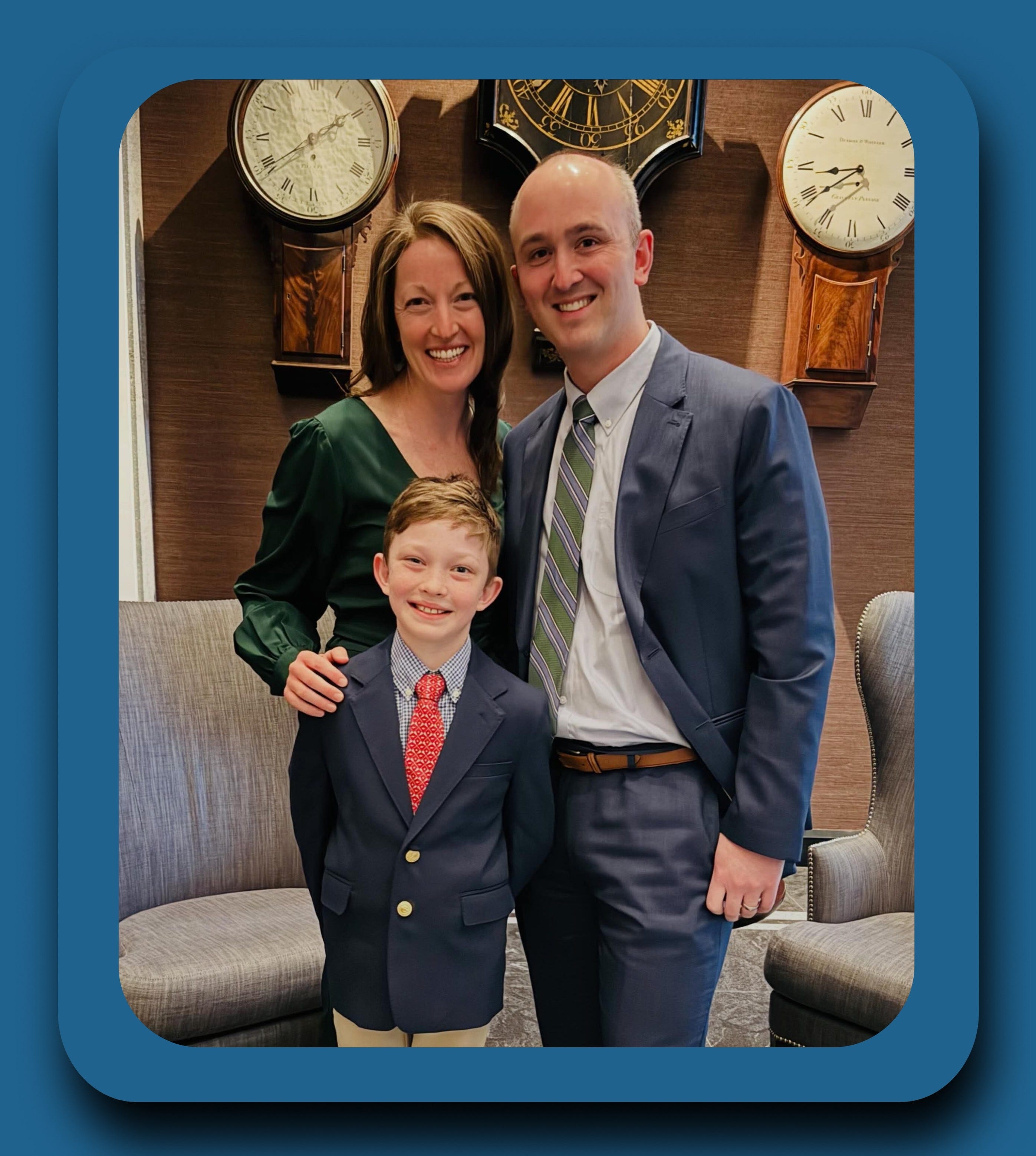
Brandon: Thanks for having me. I grew up in a small town in northwest Missouri, went to Mizzou for undergrad and met my wife, Chelsey, while we were there. We’ve been married since 2009 and had a son, Oliver, in 2015.
Austin: How did your interest in medicine originate?
Brandon: Funny, I actually did not think I was going to become a doctor. I would have never told you 20 years ago that this is where I would be in this moment. I grew up on a farm and the only school I applied to was the University of Missouri. There wasn’t really anyone in my family who had gone to any school beyond high school. I didn’t really understand what the next steps might look like.
So I went to Mizzou studying agricultural education. I quickly realized that was not the content for me. I actually had a bit of a crisis moment. One winter break, I was like, Dad, I think I’m going to drop out. I don’t want to do this. He said, well, why don’t you stick with it? Then in the spring semester, I had this biology course that really changed the trajectory of where I was going. I realized that I love science. I changed my major to biochemistry.
After I got my bachelor’s in biochemistry I didn’t get into medical school right away; I took the medical entrance exam three times. I went to Mizzou School of Medicine and graduated in 2015. After residency at Mayo Clinic, I became a medical oncologist. I treat patients who have gastrointestinal cancers like pancreatic cancer, colorectal cancer, and liver cancer, among other GI cancers.
Once I finished my chief year, we moved to Boston where I was a medical oncology fellow at one of the Harvard Medical School programs and am now on faculty there as a GI oncologist. I’ve officially been a doctor since 2015, but I finished my training in 2023 and that’s when I began practicing independently. So it’s not a quick career path.
Austin: Were there maybe one or two moments that stand out in your training?
Brandon: Professionally, everything I’ve achieved has been because of the people around me. I couldn’t have done any of it on my own. My wife, Chelsey, has been my rock. She’s encouraged me, refined me, and shaped so much of who I am. I’m incredibly grateful we met in undergrad and have walked through this entire journey together.
Austin: Where did you feel the pressure to perform most throughout your training?
Brandon: Being a physician is really about stepping into someone else’s life. People tell you vulnerable things they’ve never told anyone else. That’s an incredible privilege because they’re inviting you in when something has gone wrong.
Medicine begins with the understanding that the human body was designed to function a certain way. Our job is to figure out what went wrong, why it happened, and what we can do to help restore it. That’s the art of healing.
During residency, the pressure came from wanting to do that well. I wanted to ask every important question the first time, but inevitably I’d have to return to a patient’s bedside and say, “We didn’t talk about this—can I ask you a few more questions?” Fortunately, most people were incredibly gracious. Those conversations helped us understand what was happening and develop the best plan we could.
Austin: So the greatest pressure comes in trying to bring healing. Is that right?
Brandon: When I walk with someone through a cancer diagnosis, I’m entering one of the hardest, most vulnerable seasons of their life. There’s an expectation that I’ll provide physical healing. From a scientific perspective, my job is to understand how cancer has disrupted God’s original design and determine how we can intervene.
What’s humbling is that I can’t heal most people. That’s probably the hardest part of my job and the greatest pressure I carry.
Austin: Say more about that. How have you learned to navigate that pressure?
Brandon: Patients entrust their lives to me. That’s a heavy responsibility. I go back to the science, the research, and the clinical trials that have shown what helps people live longer. My job is to slow the cancer’s growth and give people as much life as possible. But I only have so many tools in my toolbox.
Eventually, I reach the point where I have to tell someone, “I don’t have any other treatments.” That’s incredibly humbling because I know I can’t give them what they’re hoping for.
Austin: How have you learned to handle those moments?
Brandon: Honestly, I don’t handle that pressure very well. When someone comes to my clinic, they hope for a miracle. They hope for a cure. Sometimes I have to tell them we’re not even close to that. I want to do more, but I can’t.
At the same time, it reminds me that I’m not God. I have God-given abilities, and I’ll do everything I can. Some patients will live longer because of the treatments we offer. A few will even be cured. But many won’t. The only guarantee I can give is that, at some point, the cancer will end their life. That’s incredibly difficult.
One thing my training has taught me is the art of communication; that is, how to share hard news and understand what people value most. Patients tell me what they’re hoping for, what matters to them, and it’s my job to set aside my own emotions, enter into their world, and walk with them honestly.
Austin: You’re on the front lines of suffering and death. How has your faith in Jesus sustained you in that work?
Brandon: My faith is foundational to who I am. If I didn’t believe God had called me to this profession and these people, I wouldn’t be doing it. Honestly, I don’t know that I could witness this much pain and suffering without the greater hope of renewal.
Medicine teaches that there’s a normal way the body is designed to function and studies what happens when that design breaks down. Through the lens of Scripture, that makes perfect sense to me. I believe there is an intentional design—a world spoken into existence by God. Even at the cellular level, there’s an incredible order to how things are meant to work.
Cancer reminds me every day that we live in a fallen world. Something has gone wrong. Even scientists who don’t believe in God recognize that disease is the result of normal processes breaking down. As a Christian, the Fall provides the most coherent explanation for what I see.
Austin: Let me ask a more specific question. What has your work taught you about death and suffering? And on the other side of that, what has it taught you about life and hope?
Brandon: As an oncologist, I walk with people through death and dying. Our culture tends to avoid death. We don’t talk about it, and often we let someone else care for our dying loved ones. I’ve noticed that people tend to value the same things in the end. They want joy. They want relief from suffering. Also, everyone longs for connection, especially as life comes to a close.
I care for patients from every imaginable belief system. Some have a deep faith in God. Others find meaning only in family, and many fall somewhere in between. When I have the opportunity, I like to understand what they believe and what matters most to them.
Another important part of my job is helping people decide how much suffering they’re willing to endure. I often ask, “What are you willing to go through to live another day?” Everyone’s threshold is different. My role is to understand what matters most to each person and guide them through those decisions.
Austin: That brings me to another part of your work. You haven’t mentioned this yet, but you’re doing significant research. What’s it like balancing patient care with research?
Brandon: I spend a couple days each week seeing patients. The rest of my time is devoted to research, primarily designing and running clinical trials for pancreatic cancer and other GI cancers. The goal is to test therapies that will become the next standard of care. I never imagined getting to do this when I started my training.
Austin: I imagine it can be easy to tie your identity to your publications, promotions, or recognition. Have you seen that temptation?
Brandon: Absolutely. Our culture measures people by performance, and medicine is no different. Research productivity affects promotions, compensation, and opportunities. That can feed your pride. You start thinking, I did this. I’m changing medicine. But that’s simply not true.
When I was in medical school, I looked up to many of the people I now work alongside. I assumed they were brilliant people changing the world on their own. But every meaningful advance comes from teams of people working together. That’s humbling, but it’s also freeing. I get to rely on my colleagues, and they rely on me.
Austin: What advice would you give someone who’s in medical school, or just considering medicine?
Brandon: I’d encourage people to follow where they feel most called. Someone once told me to notice what I naturally spend my time reading because it often points toward what you’re called to do. During medical school, I was drawn to the journal articles describing practice-changing discoveries, and now I work in that area.
Austin: What do you want people to know about doctors?
Brandon: My answer is shaped by some of my own experiences as a patient and as a family member.
While I was in medical school, my mother-in-law developed cancer. I spent about a month helping care for her in the hospital, and ultimately she died from that cancer. That experience taught me what it’s like to be on the other side of medicine—to live with uncertainty and unanswered questions.
Later, Chelsey and I discovered we were unable to conceive naturally. We walked through infertility, a lot of prayer, and then IVF. We’re incredibly grateful for our son, Oliver. When Oliver was born, he had significant medical complications. He spent months in the hospital and underwent a life-changing surgery after we moved to Boston. Over the years, he’s had more than a dozen surgeries.
Those experiences changed me. Knowing medicine is one thing. Sitting beside the hospital bed as a husband and father is something entirely different. I experienced the medical jargon, the uncertainty, and the emotions from the patient’s side, and that profoundly shaped the kind of doctor I’ve become.
When people ask what I hope patients understand about doctors, I’d say this: every physician is human. Everyone appreciates the surgeon who comes in during the middle of the night to perform an emergency operation. But we don’t often think about what that person may have left behind—a spouse, children, or difficult circumstances at home—to care for someone else.
Austin: As we wrap up, is there one final thought you’d like to leave with our listeners?
Brandon: I think one of the greatest lessons has come from watching people live well—and even die well. There’s one patient I’ll never forget. This may be difficult for some people to hear, but conversations about the end of life are a regular part of my work.
I cared for a man in his fifties whose cancer had spread throughout his body. He’d been through multiple rounds of treatment, but eventually the cancer became resistant to everything we had. I asked him and his wife to come in. I told them, “We’ve run out of treatments. I think it’s time for hospice.”
Then I said the hardest words a doctor can say: “I wish I had more to offer you, but I don’t.” He didn’t respond with anger or even much emotion. His wife had the opposite reaction. She began sobbing, standing, and pacing the room. The husband pulled himself out of the wheelchair, walked a few feet toward his wife, wrapped his arms around her, and said, “It’s going to be okay. Remember, I have Jesus. This isn’t the end.”
I had to look away because I was choking up. To someone who doesn’t know Jesus, those words might not make much sense. But in that moment, they captured everything I believe. This man was dying, but his hope wasn’t. He knew that one day Christ would make him new. It was still a heartbreaking moment, but there was also a sense of hope. I’ll never forget it.
Austin: That’s such a powerful picture. As you were talking, I kept thinking of Jesus’ words: “I am the resurrection and the life. Whoever believes in me, though he die, yet shall he live.” I’m not sure we could end on a better note than that. Brandon, thank you so much for being with us. Would you close our time in prayer?
Brandon: I’d be honored.
Heavenly Father, thank you for your goodness and love. Thank you for the stories you’ve allowed me to be part of. I pray those stories would always point to you and bring you glory. Lord, I pray this conversation has encouraged those who are listening. Help us hold fast to the promises you’ve given us, faithfully serve the people you’ve placed in our lives, and live with the hope that only you provide.
We pray all of this in Jesus’ name. Amen.
Austin: Amen. Brandon, thanks so much for being with us.