

What happens when the life you thought you were building suddenly stops making sense?
A career takes an unexpected turn. A job disappears. A diagnosis changes the way you understand yourself. And the carefully constructed picture of work, family, and the future begins to unravel, exposing that work-life balance doesn’t actually exist.
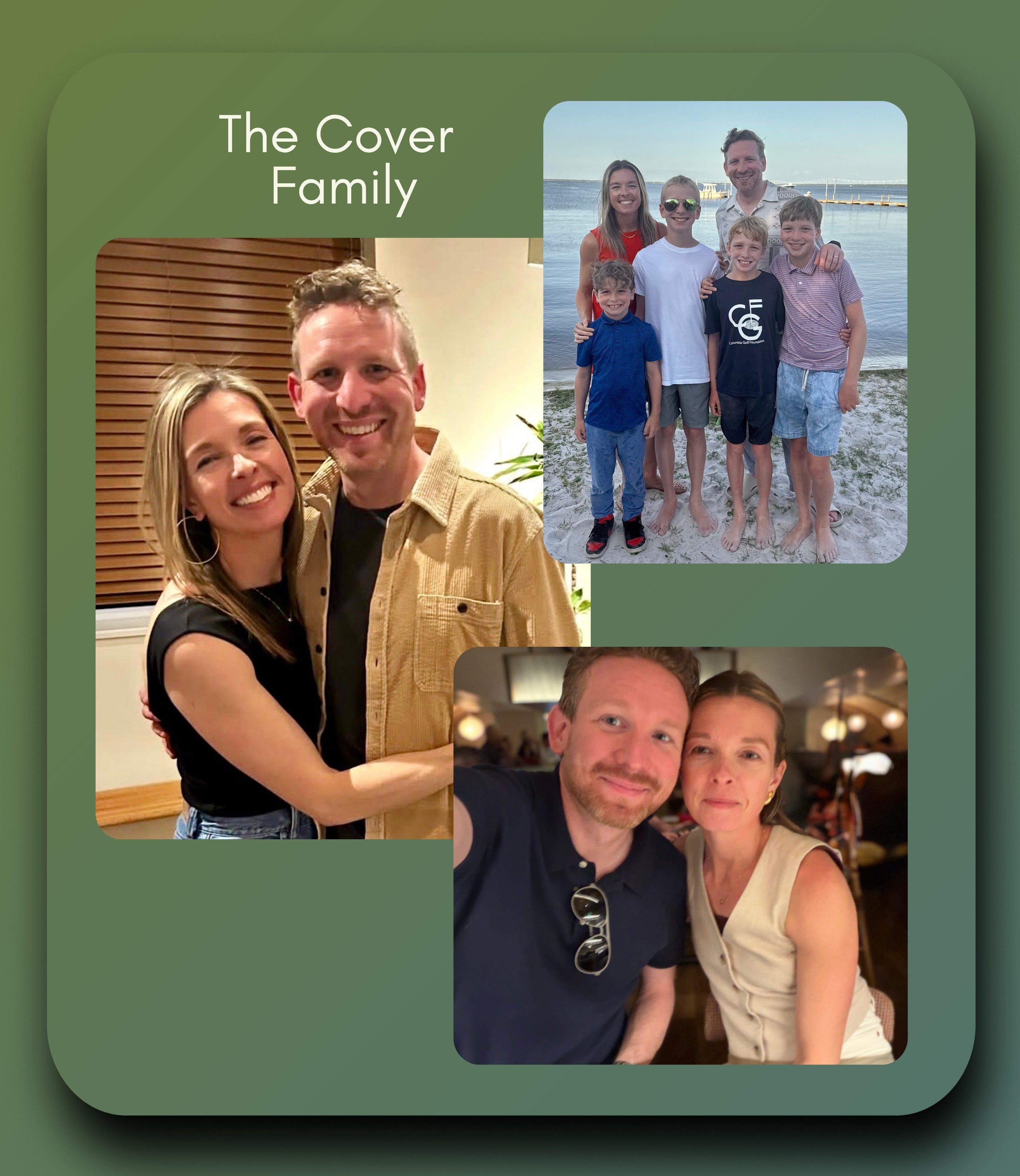
In this episode of Performing Under Pressure, hosts John Tinnin, MFT, and Lynn Roush, LPC, sit down with David and Molly Cover, a couple who found themselves navigating multiple job losses, major career transitions, the discovery of ADHD, and the anxiety and grief that came with all of it.
Listen in as David and Molly share honestly about what happened when their plans collided with a reality they couldn’t control, and how the pressure affected their marriage, their parenting, their identities, and their faith. As they turned to God, counseling, and their community for support, they learned to navigate their anxieties rather than be controlled by them.
But this isn’t a story about having everything figured out. It’s a story about being disoriented, surrendering the illusion of control, and learning to reorient around what matters most. If you find yourself losing balance and going in a direction you didn’t expect, God may be redirecting your destination and giving you the gift of learning to rely on him.
Highlights from this Interview
John: Today we’re going to talk with some collision experts. But it’s not what you might think. We’re tackling the colliding worlds of work and family life. You’ve heard the phrase work-life balance, and we’re going to suggest today that that is a bit of a myth.
Lynn and I are in the studio today with David and Molly Cover. David is president of the Senior Company, and Molly is a full-time working professional in digital relations. Molly, why don’t you give us a quick picture of what your work looks like day-to-day.
Molly: I work full-time here at The Crossing as co-director of our digital team. I manage a team of 12 people that involves a lot of one-on-one meetings and meetings with other teams. At home, we have four active, busy boys, ages 14, 12, 10, and 7. I am in the office as full-time as I can be. I work at home a little bit in the summer just to spend time with our kids.
David: It’s been exciting having this summer, all four kids at home, no childcare other than a dog kind of barking at us. Figuring out how to live life in the chaos.
John: David, you are president of a company. Can you tell me what this looks like for you?
David: The Senior Company does in-home care for seniors. We want to be a trusted care partner. Navigating aging is really hard, whether you’re the child trying to care for your parents or you have your spouse needing care. We want to keep everyone safe, seen, and supported with in-home care.
I’ve just started doing it; I think I’m about four months in at the time of recording this. It’s not a space I ever thought I’d be in, but the impact this company has on people’s lives is stunning. I’m privileged to be a part of it.
John: We’re going to frame this episode in three sections. The first one is how you thought life was going to go. We call that orientation. The second phase is disorientation. That’s what happens when you hit a wall and things don’t go according to plan. The third one is reorienting yourself to what matters most in life.
Lynn: David and Molly, I’ve known both of you guys for a long time. It’s fun to see you together, grown up, raising a family. I’m excited about today’s conversation because listeners are going to hear not how you’ve got it all figured out, but how you’re still thick in the weeds of figuring things out.
Take us back three or four years ago to the orientation stage. What was happening in your life at that time and what were your plans for the future?
Molly: Three or four years ago, David was working full-time. From when our first son was born, I had been staying home but also working part-time. Back then, I was increasing my hours with the plan to get the four kids in school. I still had one at home. Once he was in school, I planned to ease my way back into work and figure out what worked for our family. I felt like I had the flexibility to do that with David’s work and the way we had structured our lives.
Three years ago, I got the opportunity to go from part-time to full-time at The Crossing. My boss at the time was very gracious, but he said, if you want this job, I need you full-time in the office. You’ll need to figure out what that looks like for your family. That was a big turning point for us.
Our lives went from normal American dream-y, dad works full-time, mom’s staying home, kids are in school, to now we need to restructure our lives and figure out what it looks like for both of us to work full-time. I had the illusion that if I continued to make the right choices, I could control the outcome.
Lynn: What about you, David? Tell us about where you were at in your career.
David: I’d had an opportunity to move from full-time ministry into the workplace outside of the church. It was exciting, because I had the potential to make more money than I ever had in ministry. We had bought a dream home in a dream neighborhood here in town. I got a new car that I just love. But then things started to go off the rails.
John: What happened that caused it to stop working so well?
David: When I left full-time ministry, I joined a start-up. Right after I started, the CEO who hired me was fired. They found another role for me in the company. But that launched a period of instability. I felt like I couldn’t find my lane, I couldn’t find clarity on how to use my gifts. I had imposter syndrome. There was pressure to go to work, maintain my salary.
Around that time I was approached about working for a nonprofit, and I didn’t have to think much about it; I jumped right in because I had been struggling with sleepless nights and insecurities. I told Molly she needed to work full-time. We were making decisions from a place of anxiety.
During this time one of our sons was struggling. After he was diagnosed with ADHD, while talking to his doctor, I realized that I have it too. After that conversation, I just laid on the ground. I felt broken because I couldn’t make the new job work and the way I viewed myself was changing.
Lynn: You guys had reached the ‘wall’; the tearing of the fabric of what you thought you had known. That’s a place of surrender and humility. That must’ve felt really like an undoing.
Molly: I had to wrestle with believing that God is good, but that doesn’t mean giving me the things I want or need; he has something better that will look different. I remember us sitting in our living room counting our losses in this season. It felt really heavy. I had to ask, What do I ultimately believe?
Lynn: How did it affect your marriage?
Molly: As hard as that season was, it made us have to communicate on a different level that we never had to before. There was a blessing to that because it could have just been a season where we both withdraw completely. But because we were so isolated, we clung to each other.
David: Because of the pressure I experienced navigating what was next, and learning about my brain, I found myself withdrawing and even dissociating. The kids would be playing around me and I was not paying any attention. It took effort to connect. For men, you lose a job, then you lose your identity, and then you lose community. There’s a lot of shame.
Lynn: What was the impact on your kids during this time?
Molly: We definitely saw the effects of anxiety on our home. We talked with them about it so that they knew what was happening. But my anxiety really came up when the house got messy and chores weren’t done. In fact we’re still repairing from the stress of that season.
David: The story keeps going. I changed jobs and a little over a year after that my department in the nonprofit was laid off. I was back to square one. I started to wonder if God was punishing me for leaving ministry. The whole experience exposed the illusion of control that I thought that I had.
Lynn: The disorienting ‘wall’ comes to everyone differently. For one person, it can be that divorce they don’t want. For another it can be a cancer diagnosis.
John: The gift that God brings in those times, as painful as it is, is showing us our hearts and how much we need to collapse upon him. And I think you guys got to that point.
Lynn: David, the second go-around for you in the job transition, you both decided you wanted to do it differently. How did that look?
Molly: When David found out they were eliminating his position, he said, “We’re not doing the anxiety spiral. We’re not collapsing. We’re not doing that to our kids. We’re not doing that to our marriage.” The biggest difference was reaching out to friends almost immediately. It was still stressful. But people showed up in our lives in that season. And it made all the difference.
David: If there is any advice I’m going to give, it is to run toward community. If you’re walking through something right now and you think you need to handle it alone, that’s probably not true.
John: As you get older and you see friendships come and go, you learn that friendships come in chapters and seasons. We like to think that every friendship is going to be stable. But friendships shift. If someone helps you through one season of life, and then they’re not part of your life, look for others who can be with you.
Lynn: Moving into the third piece of all of this, now you have to reorient to your new reality. What does that look like?
David: I can see how God was working through times I thought were failures, times I thought, okay, God’s putting a hole in our boat and ripping our sails. Well, he was trying to reorient our destination because we were chasing worldly things. I am healthier now spiritually, mentally, and physically. I can navigate my anxieties instead of being driven by them.
Molly: We learned to sit with grief in a new way and we were forced to grow in a way that we wouldn’t have on our own. The life I was living was not making me grow. I’ve learned so much more about God. I’ve grown personally. Our marriage is stronger and better for it. We have a whole new vocabulary in our marriage because of counseling. Not that we have everything figured out!
David: When I’m on empty, I want to withdraw. Sometimes that’s healthy dissociation where I just need a minute. Sometimes it’s not. I’m going to go find a screen or whatever. When Molly’s on empty, she wants to move close and connect. And so we’re just moving away from each other. We have to work to find each other.
John: It’s so cool to see you guys grow and mature through that process. You’ve weathered the storms, not just by hunkering down, but by doing the hard work. It’s going to pay off in dividends.
Lynn: To wrap up our conversation, which I’ve loved, I want to ask each of you: When you’re old and looking back at your life, what do you hope is true?
Molly: I would hope at the end of my life that I will be faithful where God has put me. Whether that’s at work, at home, friendships, in marriage, at my church.
David: I long for significance. Years ago, I would have said that I want to be famous for doing great things for God. But now I want people to see that I walked faithfully through hard times as God’s son.
John: Oh, that’s wonderful. Every Christian has to make that identity shift. That’s our destiny. Proverbs 27:1 says, “Don’t boast about tomorrow because you don’t know what a day may bring forth.” You guys have given us a good picture of learning to live in the present day.
David: I’ve been in a men’s group with you, John, for the last almost two years. The permission you give for people to slow down and be human-sized and to be seen as having weaknesses and still be loved and known has been transformative for me. Thank you for your ministry with this podcast!