

What do you want people to remember after the performance is over?
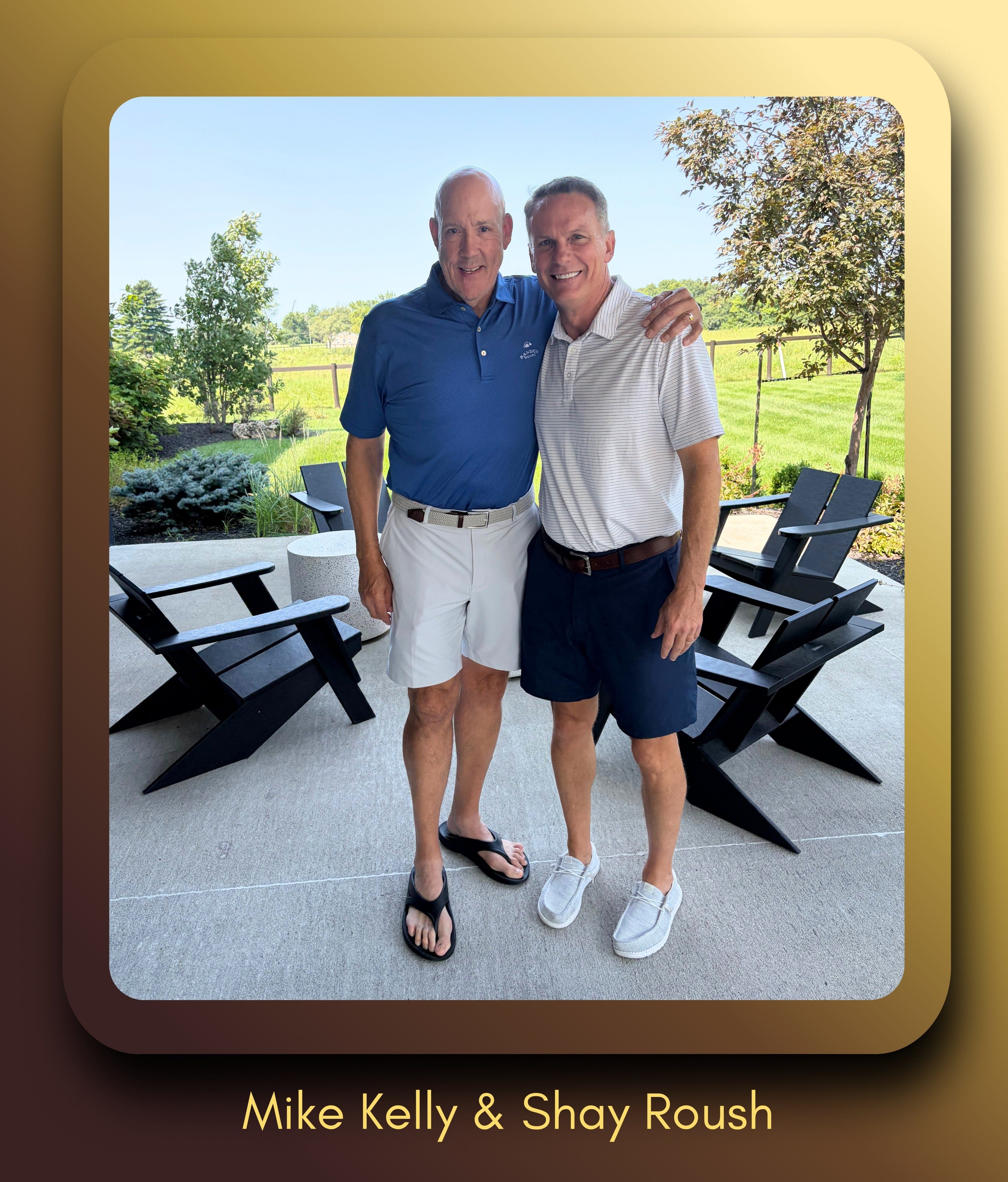
In this stunning conclusion to our Performing Under Pressure series, Shay Roush, M.Div., sits down with none other than the Voice of the Tigers, Mike Kelly, to talk about his remarkable career behind the microphone. For more than three decades, Mike has stepped gracefully into high-pressure moments to give listeners a clear picture of the plays unfolding in front of him.

Along the way, he has called more than 1,000 Mizzou basketball broadcasts and hundreds of consecutive football games, earning the respect of fans and fellow broadcasters. He talks candidly with Shay about not having all the answers, being kind to himself when he makes a mistake, and the importance of having people who will stay beside you when life gets hard.
His story also reveals the people and relationships behind a remarkable career—from mentors who opened doors and taught him the craft to coaches, players, families, and friends. You might be surprised that behind the polished calls, Mike still gets a little nervous before a game. But he believes that nervous energy is evidence that you care deeply about the opportunity in front of you.
Throughout this series, we’ve heard from real people who handle pressure not by avoiding hard moments, but learning how to move through them. Whatever your calling, your challenges, or the pressures you carry, we hope these stories encourage you to use the gifts you’ve been given and become the person you’re capable of becoming. In the end, your legacy isn’t about professional accomplishments, awards, and acclaim—it’s about the way you love God and the people around you.
Highlights from this Interview
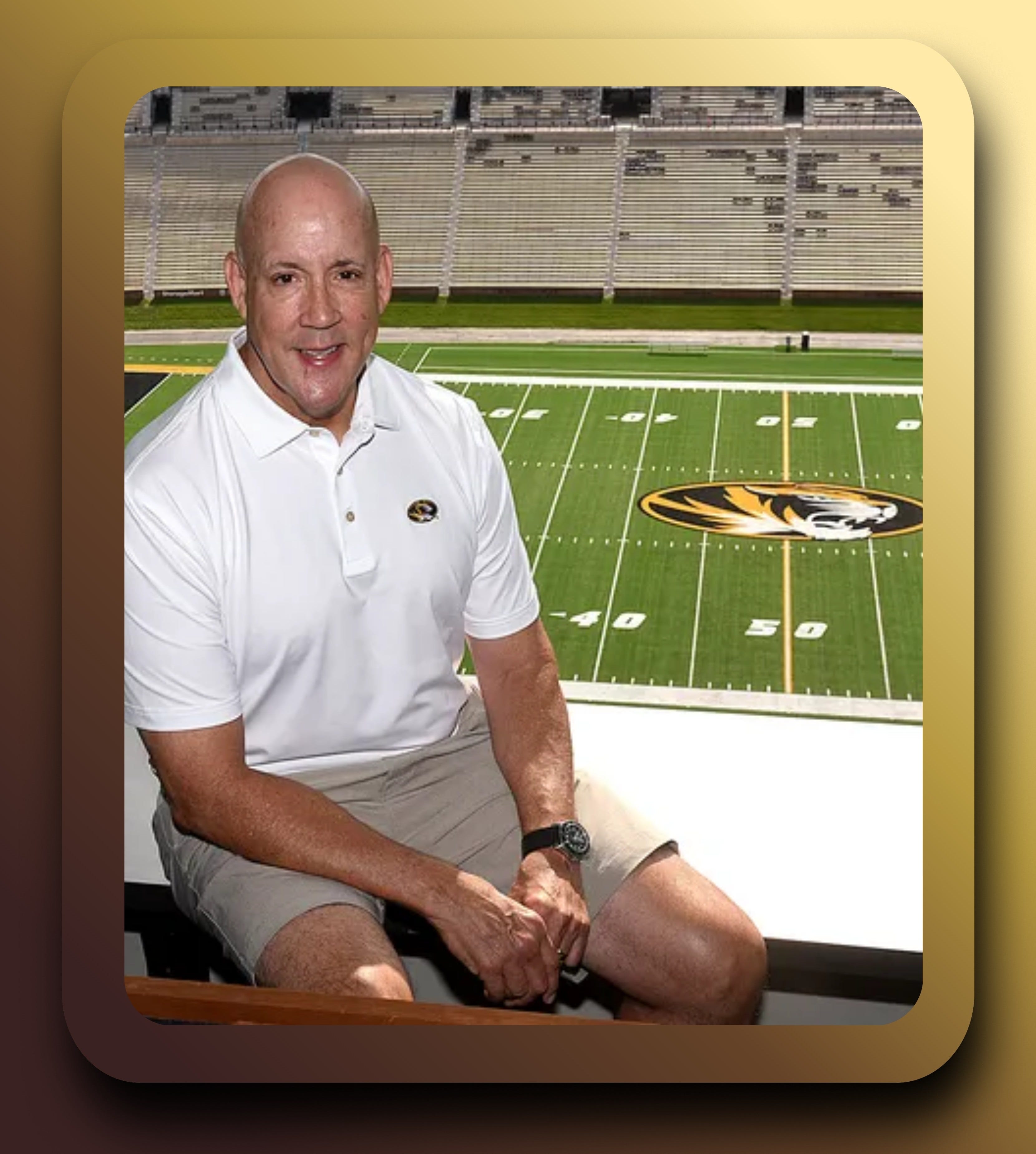
Shay: Hi everyone, I have a special guest with me today. If you’ve followed Mizzou sports at all over the last three decades, you know this voice. Mike Kelly is the radio play-by-play announcer for Mizzou football and basketball. As the Voice of the Tigers, he’s had over 1,000 broadcasts and not missed a single game since 1994.
He’s won Missouri Sportscaster of the Year seven times. He’s in the Missouri Sports Hall of Fame. Too many achievements to mention. Mike, welcome to the podcast. It’s an honor to have you here.
Mike: Thank you so much for having me. Just to clarify, I’ve done over 1,000 broadcasts with Mizzou basketball, and missed a game or two, but not missed any with football.
Shay: Well, then, even AI can make mistakes. Do you know how many football games that is?
Mike: 396. Lord willing, if I can make it to the Mississippi State game, that would be 400 consecutive games.
Shay: We got to know each other when I was the Mizzou chaplain. I think that you are one of the best sports broadcasters out there. My wife would say the same. Last year, we were driving somewhere and listening to you. Lynn is not really a sports fan, but after listening to you call a game, she said that you are really good at what you do. And Lynn’s dad is Erwin Lutzer, a well-known pastor and teacher, so she definitely knows great speaking.
Mike: That’s very kind. Sometimes people come up and tell me that they turn down the TV volume and listen to the radio broadcast while they’re watching. It’s very humbling that people find my work acceptable.
Shay: Let me start off by asking, what makes a good sports broadcaster?
Mike: In radio, you have to always remember that it’s incumbent upon the broadcaster to paint the picture. You’ve got an open, clear palette. And for the listener, no matter where they might be, you’re painting a picture for their imagination to see what is going on on the field or on the court, while they’re doing whatever task they might be doing.
I think the other important thing is the ability to call the play. That was a piece of advice that Jack Buck gave me before I called my first game at Mizzou. I always refer to him as Mr. Buck because of the profound amount of respect that I have for him. Mr. Buck said, “Call the play.”
Shay: What does that mean?
Mike: It means that you don’t know who’s listening. You may think because you’re calling Missouri games that most of the listening audience are Missouri fans, but there also might be the other team’s fans or neutral fans. Call the play with an equal amount of description, inflection, and enthusiasm for whatever the play might be, whether it’s in Missouri’s favor or the other team’s favor.
He would also say, “I don’t care what you think about the referee. You’re not one. I don’t care what you think about the coaches. You’re not one. You’re a broadcaster. So call the play.”
Shay: That’s really good. How do you have enthusiasm for both teams if you lean to one side?
Mike: You make sure to give justice to every play that happens in front of you. Since radio is a medium of imagination, you paint a picture for the listener. Something I tell young broadcasters is, you need to have your own unique style. And not get caught up in your notes. Even though you may have facts to share, you can lose the pace of the game if you focus on your notes.
Shay: Your broadcasting career goes back many years. You started by calling women’s volleyball games, is that right?
Mike: I had been at the University of Illinois in Champaign after graduating from Southern Illinois University in Carbondale. After one opportunity didn’t work out, I was hired by Jim Manley, the father of one of my good friends. He was the program director at WDWS and also the morning host.
The 1985 Illinois women’s volleyball team won about 20 consecutive matches to begin the season. It was apparent that they were going to the NCAA tournament. The powers that be at the radio station made the decision that we were going to broadcast the NCAA tournament matches. They asked me to call the games, and I said, I’m in.
Shay: How do you learn to call volleyball?
Mike: Mike Hebert, a legendary figure in Illinois volleyball history, was the head coach at the time. His assistant was a gentleman named Don Harden. I went over to the old Kenny Gym on the Illinois campus where they used to play their matches in practice, and sat on the baseline during practice for several days in a row. Don would call out exactly what was taking place on the court. This is a serve, a pass, set, spike, dig, pass, block, cover, set. You learn the terminology, but you also learn the flow of the game.
Volleyball is a really unique sport in that it never yearns for excitement—there’s always movement. That was a really good foundation for me as a young broadcaster. It taught me pacing. It taught me how to selectively edit in my mind based on the flow of the match.
Shay: You ended up at KMOX, which is the flagship radio station in St. Louis for Cardinal games. How did that come about?
Mike: I auditioned for the position in April of 1988. I had maybe a little bit of an edge on some of those that were interested in that position because for two years prior to that, I was a correspondent for KMOX on the University of Illinois Sports. Anytime something happened with one of the games, I would send them “voicers”, little snippets they could play on the air, as well as sound bites from coaches and players.
After the audition, I went home. But I didn’t hear anything. I had a mentor named Jim Holder that I had met when the Chicago Bears were practicing down in Champaign. I asked Jim, “How do I get this job at KMOX?” He told me I needed to get to the legendary Robert Highland, who was the general manager of KMOX and senior vice president of CBS. Jim warned me that I’d need to call Robert before 6 am, because that’s when Robert went to mass.
So I decided to call Robert every Friday at 4:30 am. I’d ask if I got the job and hear, “We’re still looking.” But eventually the phone rang at 4:30 and I knew I had the job. It was an amazing opportunity; I had the chance to work with and learn from Jack Buck, Bob Costas, Bob Hardy, and Bill Wilkerson. Just absolute legends.
Shay: That is so awesome. Let me ask you, which one is more challenging to call, football or basketball?
Mike: They each have their challenges. With football, you have 22 bodies on the field at the same time—11 on offense, 11 on defense—and there’s a large number of different things that could take place during one snap of the ball. With basketball, the pace of the game creates a challenge.
Shay: Are there two or three games that are highlights in your mind where you did a great job with calls? Or times where you made a mistake?
Mike: Anytime someone asks me after a game, “How’d the call go?”, my answer has always been, “I hope I did it justice.” That’s the way I’ve always tried to approach it.
There have been times when I’ve been upset with myself about missing a call. I remember the Cotton Bowl that Missouri most recently played in against Ohio State. We’re at the opposite end of the field, corner of the end zone, and Mizzou throws a touchdown pass to Luther Burden. From my vantage point, I thought it was intercepted. No, he caught it. I could get upset with myself, but there’s no perfect broadcast.
One of my most embarrassing moments was as a PA announcer for the Cardinals. There was a clip that would go on your belt and you would engage the button for the microphone and announce the batter. One time, the button was still engaged, and I leaned into the microphone and yawned as loud as someone possibly can. It billowed through Busch Stadium to the point where the umpire called timeout and ripped off his mask and turned around and looked up. I literally dove under a table.
Shay: That’s hilarious! Part of the charm of what you do is being able to develop relationships with a variety of different people and see those people thrive in their positions throughout the course of time.
Mike: When you’re doing the play-by-play, you’re also developing relationships with coaches and families. Whenever the leadership changes, it impacts a lot of people. I give credit to the late Larry Smith for putting Missouri in a position to go to back-to-back bowl games in ‘97 and ‘98. And then Gary Pinkel came in and provided consistency. And now Coach Drinkwitz has given Missouri fans an opportunity to dream of things that they’ve never thought possible.
Shay: It’s incredible the number of people you’ve encountered that have had positions with either the football team or the basketball team.
Mike: Every conversation is a networking opportunity, right? I tell that to young people all the time. I’ve been very blessed that my network has grown through the years because of the relationships I’ve been able to develop.
Shay: Do you get nervous before you call a game? Basketball or football?
Mike: Both. I was nervous before I sat down here today with you. If you don’t feel some nervous energy before a game, stop, quit, walk away. Because that nervous energy is the manifestation of excitement for your job and for the opportunity to perform your craft.
Shay: Let me switch gears just a little bit with you, Mike. We’ve talked about your job and everything that you do professionally. But what keeps you grounded in life?
Mike: Shout out to my wife, Laurie. We will celebrate our 38th wedding anniversary coming up on August 20th. Looking forward to that. And we have three wonderful daughters. They’re a blessing.
I’ve always tried to be humble. When you first get into this business, it’s easy to think that you’re here because of your immense talent. And that’s not it at all. God has blessed you and given you an opportunity to use your talents. None of this happens without God’s master plan.
I read a book once by Gale Sayers, legendary running back for the Chicago Bears, about how God should be your number one, family’s two, and you are third. That was the name of his book, “I Am Third.” Am I a sinner? 100%. Do I pray for grace and for mercy every day? Yes. Am I extremely blessed? No question about it.
Shay: Our men’s group that meets Thursdays for lunch has been a great support for me, and I think it has for you too. Texting each other when we need prayer, encouraging each other.
Mike: Absolutely. I’ve learned how to accept that I don’t have all the answers. And there are times that I need someone to help me from a counseling standpoint. I’ve been able to lean on that over the last couple of years. And I think that’s been a very healthy, nurturing.
Shay: I think men get in trouble when they isolate themselves from relationships. You may get some of that from your wife or your kids, but we need other men in our lives to grow and to sharpen one another, to bounce things off. Sometimes just to emote, and know that that person’s still going to love you and care for you and stick by you in the hard times.
Let me ask a final question here. Someday, when you’re old and gray, what do you want your legacy to be?
Mike: Well, I’ll never have gray hair, but I think this is a great question. I would want people to say that he was a good husband, a good father. That he showed up to work enthusiastically to do his job consistently, and he was accountable along the way.
Shay: There’s a writer who talks about your résumé virtues versus your eulogy virtues. Everybody has their résumé virtues. That’s what they’re going to read off at your funeral: “He was a broadcaster and won these awards”. But your eulogy virtues are the things that people are going to get up and say about you at your funeral. Was he kind to people? Did he love people? That’s what people remember.
I just want to say I appreciate your friendship. I’ve seen you involved in so many things over the years and it’s people like you that make our community such a great place to live. Thank you for being on our podcast!
Mike: Thanks for the invitation. Love you. I’ve enjoyed it!