

Did you know that underneath every addiction is the addiction to control?
In this wrap-up episode of our series, Dealing with Your Addictions, John sits down with Sharon Hersh, LPC, to talk about why we are addicted to control and how we can break free of our compulsions. Sharon is a therapist, author, speaker, and follower of Jesus, but more than that, she is someone who refuses to trade truth for comfort.
You’ll hear about:
The pitfalls of using control as a coping mechanism
How shame thrives in secrecy
Why recovery is based on honesty
3 daily practices that lead to freedom from addiction
If you’ve ever felt weary from trying harder, or unsure how faith and freedom actually meet in real life, this conversation offers honest insight into your lifelong compulsion to save yourself—and why surrender to Christ is the only way out.
Highlights of John’s Conversation with Sharon
John: I’m so glad to talk to you, Sharon! A number of years ago, I heard you speak on addiction and I distinctly remember your honesty, your vulnerability, and I thought, this is good. I can follow her. How did your personal experiences lead you to write this book?
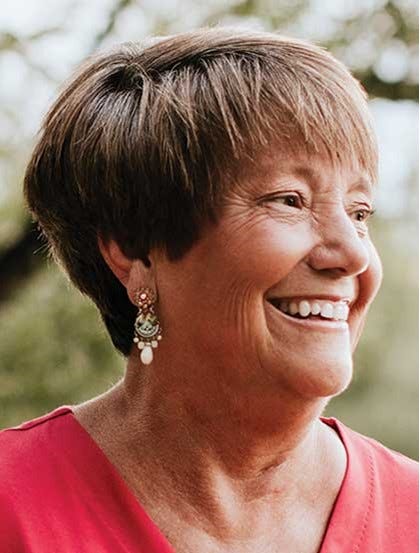
Sharon: No one leaps into an addiction. I didn’t leap into writing this book. But addiction in my own life preceded the contents of this book. I grew up in a Christian family, went to a Christian college, married someone from that Christian college, and found myself thousands of miles away from home struggling with anxiety. I wanted everything to work and didn’t know that that does not always happen.
I found myself consumed with fear, trying to manage other people so that they would fit into a life that works. One day, we stopped at the liquor store, and I had a glass of wine. As soon as I had a few sips, I suddenly felt like life was okay. I didn’t know that not everyone has a few sips of alcohol and thinks, “Ah, finally I’m at home in my own skin.”
That began a daily pattern of drinking; I quickly switched from wine to hard alcohol because I naively thought that it would have less calories. Daily drinking became a pattern until finally alcohol hijacked my brain. The only way that my brain could produce the natural chemicals that deal with anxiety and stress was through that daily drink.
That went on for six years before God began to graciously drop clues in my life that this was a problem and might become a bigger problem. I eventually looked up the name of a Christian counselor in my town. I made sure his office was on the other side of town because I didn’t want anyone to see me; all my drinking was in secret. At this same time, my husband was the head of the deacons at our church, and I was the head of the children’s ministry. No one knew.
This counselor said, “Why don’t you just tell people that you are drinking too much, and you need help?” And my response was, “Oh my goodness, you do not understand. No one can know about this because they will think I’m monstrous. I’m a loser. I’m not worthy to be called a Christian.” That is what I thought of myself.
Through working with him, I learned a little bit more about addiction and I stopped drinking for the first time. Unfortunately, it was not one-and-done with me. But that was when I initially stopped and told this counselor, “Hey, I like you. You’re helping me a little bit. But I’d like to go to a woman like me.”

In that moment, I decided I was going to go back to school, become a therapist, and be that person for other women. I’ve learned that when we struggle with the unthinkable, we face consequences that mire us in the bog of shame. Part of the way out is eventually being able to offer help to the world. Writing this book, The Last Addiction, is a gift to myself that I was able to give because of the struggle I went through and what I learned.
John: The other thing I hear in that is God used that crisis to bring about something beautiful. You wanted to find a woman counselor. And instead of going deeper into despair, God gave you the desire to become one.
Sharon: That is so true. I don’t want anyone to think that it was a magical one, two, three, four, five, six linear step process. It’s been a difficult journey that often involves taking two steps forward and three steps back.
John: What do you tell someone when they say, “I want to be free of my addiction, but I slip up and I relapse over and over again?”
Sharon: First I would say, I get it. Everyone knows this struggle whether they have an identified addiction or not. It’s what the Apostle Paul talked about in Romans 6 and 7. The very things I want to do, I don’t do. And the things I don’t want to do, I keep doing.
The answer, of course, is right there in the book of Romans. “Who can deliver me from this body of flesh?” I would not quote those verses to someone I had just met! But I would say this: If someone told you that you had cancer but there are three things that you can do to guarantee you’ll be free of cancer, would you do those three things? Of course, you would say yes.
It’s the same with addiction. First, seek God, pray, and meditate. Second, be honest, I mean stark raving honest with yourself, with God, and another person. Third, if you do something that involves recovery every day: going to a meeting, reading recovery literature, or meeting with another person who struggles, you will be free of your addiction.
John: I love all three of those elements so much. Thanks for your honesty.
Sharon: We have this saying in recovery that we recover out loud so that others do not die in secret. It really is a privilege to be able to talk about this subject and to tell the truth about my life, because that is part of what keeps me in recovery.
John: You must have gone through lots of iterations of trying things and stumbling, as you previously mentioned. Is that what led you to the last addiction of control?
Sharon: That’s a good question. I did eventually make it to an Alcoholics Anonymous 12-step meeting, which I attend to this day regularly. I didn’t always attend. In 12-step, we admit that we’re powerless over alcohol and our lives have become unmanageable. The twist for me is I knew after those initial six years of drinking that I was powerless. I didn’t like what it was doing to me.
The very definition of addiction is continuing to do something despite adverse consequences. I didn’t feel well physically. I felt like a hypocrite spiritually. I was terrified of what this was doing to my parenting, and it was destroying my marriage. At the same time, I continued to believe I could manage it. I thought I could keep things under control, that things were not that bad.
I laugh as I look back now. But I think every addict begins this way. One of the consequences of addiction is it freezes our emotions. All along the way there was this clenched fist at the core of my spirit saying, “I must save myself,” knowing at the same time, “I haven’t been able to.” That misery eventually opens the door to the true healing path.
All along the way there was this clenched fist at the core of my spirit saying, “I must save myself,” knowing at the same time, “I haven’t been able to.” That misery eventually opens the door to the true healing path.

John: It’s ingrained into us that we need to save ourselves. So what do we do instead?
Sharon: We surrender to God. As I’ve given that answer over the years, I’ve been told it sounds a little simplistic. It may be simple, but it’s not simplistic and it’s not easy. Because if it was easy, we would all do it.
There’s something about giving up control that is scary. At the heart of every addiction is pain that we’re trying to numb, unpleasant circumstances that we don’t know how to deal with. But there is also always this clenched fist of, “Somehow I’ve got to do this and I’m going to do it on my own.”
John: Adam and Eve had full love, safety, security. They were seen. They were known. They mattered. And they decided to trade that in to be in control. I’ve heard that the first step in AA, to admit you are powerless over your addiction, is the most resistible step.
Sharon: It certainly was for me. And I was a believer. I was a person of faith. But this has been such a gift. Without addiction, I would be merrily going along thinking that I’m mostly in charge of my life.
John: You’re mostly in charge of your life with your big red Solo cup full of Chardonnay and vodka.
Sharon: Exactly. Or, you know, with three hours of scrolling at night and $150 of purchases from Amazon and showing up at church on Sunday morning volunteering for every committee and being involved in every activity, you’re mostly in control. It’s laughable because none of us is in control. That’s why in the Big Book of AA, one of my favorite sentences is, “Either God is everything or else he is nothing.”
John: This is challenging. You’re reminding me of why we had you come on the podcast!
Sharon: When you say this is challenging, what about that statement is challenging to you?
John: It’s challenging in the sense that it goes into every nook and cranny. You can’t isolate it to, “Well, I don’t drink, so I don’t think I have a problem.” You mentioned religious addiction. That’s hardly ever talked about.
Sharon: Of course not, because then who would do all the work? There are a lot of things that we do to feel in control of our lives that are not destructive or aren’t as overtly destructive as substance abuse, but still at the core is something other than God.
It’s what you think about when you wake up in the morning. It’s what you spend money on. It’s what you go into debt over. It’s what you keep secret from people. It’s what you feel ashamed about. It’s what you determine to never do again and then you find yourself there again in two days. It’s what you sacrifice friendships, children, even your core values for. That’s your god.
It’s what you think about when you wake up in the morning. It’s what you spend money on. It’s what you go into debt over. It’s what you keep secret from people. It’s what you feel ashamed about. It’s what you determine to never do again and then you find yourself there again in two days. It’s what you sacrifice friendships, children, even your core values for. That’s your god.
I’ve been on this journey of recovery for 30 years. And I have two adult children who are now in their late 30s, who also have struggled profoundly with addiction. Most people who struggle with addiction and can be honest about it know that this is a subject that cannot just be dealt with through half measures.

John: You mentioned that addiction is a gift. Do you want to say more about that?
Sharon: A lot of people resist that, and I certainly understand why, because initially it feels like a gift that will cut your hands and make them bleed. Yet it’s through recovery that I get to live in the truth. Truth is where God’s presence abides. If I do not live in the truth, I will not stay sober. That means if I lie about my income taxes or I forget to tell the grocery store teller that there’s actually something in the bottom of my basket that I didn’t pay for, then I’m not in recovery. The consequences for me are life and death.
John: Wow. Okay, let me ask you this. What would you write differently, since the book’s been out there for 17 years, in light of your experiences?
Sharon: I don’t think I would write anything different. I think I would emphasize two things and spend a little more time on them. The first is that no one really changes in a spectacular manner. Change is seldom spectacular.
The other thing is, apart from Christ’s life within you, you cannot know recovery. Can you get sober? Yes. Can you stop a destructive behavior? Absolutely. But for that change to affect every nook and cranny of your life, there’s only one person who loves you enough for it to stick.
John: I find my heart encouraged as I’m listening to you. Maybe that’s the way truth works. It has teeth, but it has comfort that comes along with it. You combine those really well. Love your heart. Love your story. Thank you for coming on.
Sharon: Thank you for having me!
Recommended Resource:
The Last Addiction: Own Your Desire, Live Beyond Recovery, Find Lasting Freedom by Sharon Hersh
We hope you have enjoyed this series on addiction! Stay tuned for a NEW SERIES starting January 14th called How to Handle Life where we will tackle the most common issues we see in our counseling practice: panic attacks, unanswered prayer, stress, estrangement, forgiveness, singleness, narcissism and much more!